
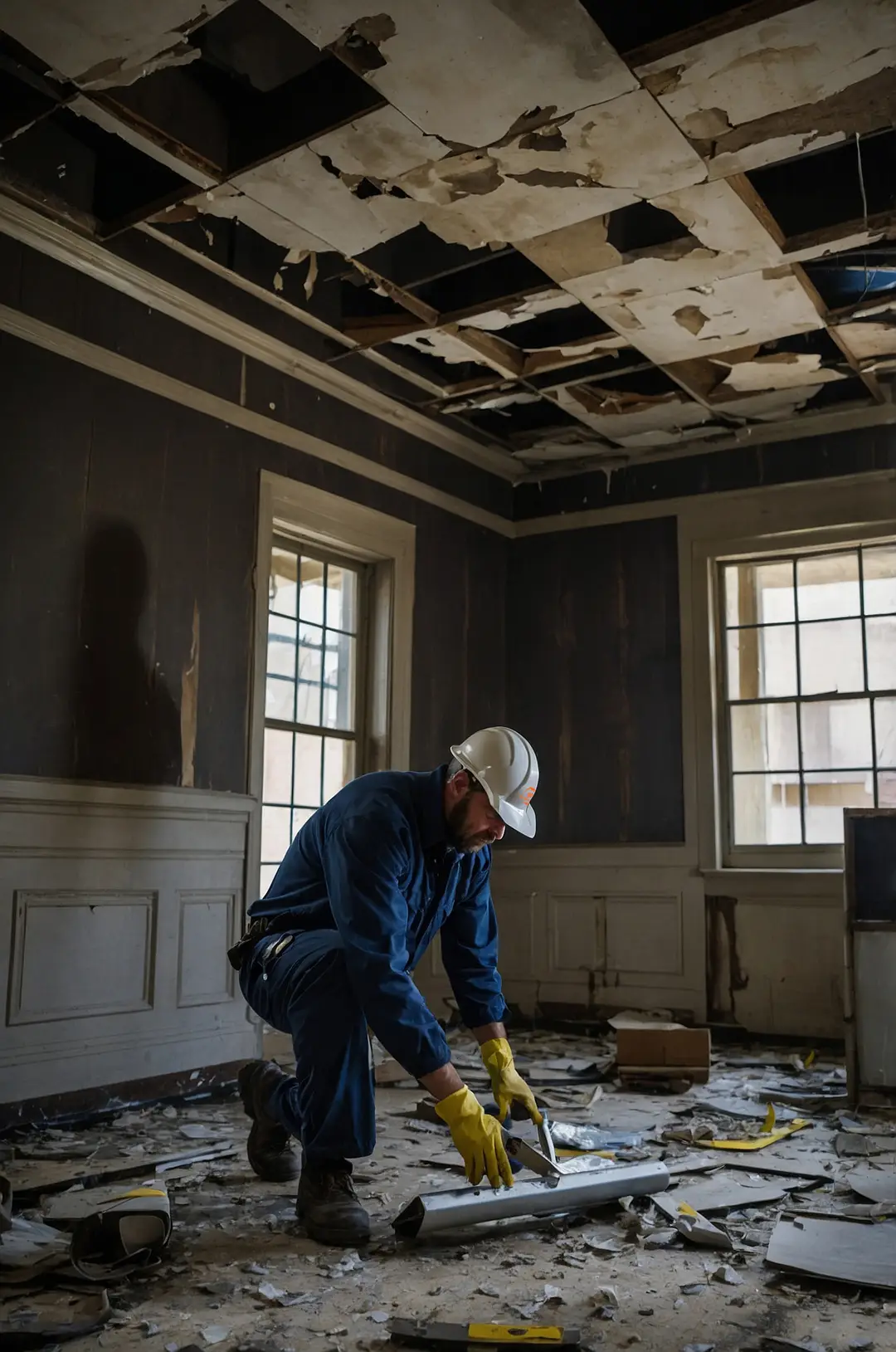
Commercial Restoration Services in Kenosha, Racine, & Waukesha County
Commercial property damage in Southeast Wisconsin doesn't wait for business hours, and the business-interruption clock starts running the moment it happens. The I-94 industrial corridor near Kenosha, Waukesha County's office and medical campuses along Moorland Road and Bluemound Road, and Racine County's manufacturing base along the lakefront and Highway 31 all face the same reality: a water main break, a fire, a mold discovery, storm damage, or a sewage backup can shut down operations that cost thousands of dollars per day to keep closed. That's why our commercial clients — offices, retail, warehouses, medical and school facilities, restaurants, and multi-family properties — count on a guaranteed response time and true 24/7 emergency response.
911 Restoration of Southeast Wisconsin operates at genuine commercial scale. Owner Joe Minsky's crews carry the equipment, maintain the documentation protocols, and have the insurance carrier relationships that commercial property managers and adjusters require. This is not a residential restoration company that occasionally takes commercial calls. We handle large-footprint water extraction, multi-story fire restoration, commercial mold remediation under IICRC S520, Category 3 water and biohazard response, and full reconstruction — with the documentation chain and adjuster coordination commercial claims demand, all the way back to pre-loss condition.
Our Commercial Restoration Services
Commercial Water Damage Restoration
Commercial water events — pipe failures in multi-story office buildings, roof membrane failures during Racine County storms, HVAC leaks in large facilities, and flooding in ground-floor retail, restaurant, or multi-family properties — require extraction and drying capacity residential equipment can't provide. We deploy industrial extractors, large-volume air movers, and commercial-grade dehumidification with low-grain refrigerant units sized for commercial square footage. Every job includes thorough property damage documentation — photos, moisture mapping, and daily drying logs — in the format commercial adjusters require, and we coordinate directly with property managers on access, operational scheduling, and business continuity.
Commercial Fire & Smoke Damage Restoration
Fire damage in Southeast Wisconsin's commercial building stock — downtown Racine and Kenosha's mixed-use corridors, Waukesha County's suburban office parks, and Kenosha's industrial south side — often carries structural complexity residential fire restoration doesn't. Our teams handle the full scope, starting with emergency board-up and site securing to protect the building from weather and intrusion, then structural assessment, thorough smoke and soot removal throughout, and odor neutralization. Because large HVAC systems distribute smoke building-wide, smoke and soot removal reaches far beyond the burn area. From there we manage contents restoration for salvageable equipment and inventory and carry the job through complete reconstruction.
Commercial Storm Damage Restoration
Southeast Wisconsin weather drives a large share of commercial losses — ice storms, straight-line winds, and heavy rain that overwhelm roofs and drainage. Our commercial storm damage restoration covers roof-membrane failures, wind damage, and the water intrusion that follows, beginning with emergency board-up and roof tarping to secure the structure before secondary damage sets in. Fast storm damage restoration is what keeps a weather event from becoming a multi-week closure.
Commercial Mold Remediation
Mold in commercial buildings — particularly healthcare facilities, schools, food service, and occupied offices — requires IICRC S520 protocol with special attention to operational continuity. Containment must account for occupied adjacent areas, and air-pressure management is critical in healthcare and food-service environments. We design phased restoration plans that keep parts of the building running while the work proceeds, meeting the full IICRC standard. Independent post-remediation clearance testing (performed by a third-party lab) and documentation are provided in a format suitable for regulatory compliance and commercial insurance claims.
Reconstruction & General Contracting
Restoration isn't finished until the building is whole again. Because we handle general contracting in-house, the same team that mitigates the loss completes the reconstruction — framing, drywall, flooring, and finishes — restoring the property to pre-loss condition. Keeping mitigation and reconstruction under one general contracting team means no gap between the dry-out crew and the rebuild, no second bidding cycle, and a single documentation chain from first notice through final finishes. For most commercial clients, that continuity is the difference between reopening in weeks versus months.
Large Loss Commercial Restoration
Large loss events — major flooding in a multi-story building, fire in a warehouse or industrial facility, or storm damage across a large commercial roof — require dedicated project management, resource scaling, and documentation infrastructure standard engagements don't provide. We staff large loss jobs with a dedicated project manager who coordinates crews, equipment, subcontractors, adjusters, and property management from initial assessment through final reconstruction. Business-interruption documentation is compiled alongside the restoration record.
Commercial Sewage & Biohazard Cleanup
Sewage backup in commercial properties carries the same Category 3 water (biohazard) classification as residential events, with the added urgency of immediate health risk to employees, customers, and the public. A restaurant, medical office, school, or hotel cannot operate during or after a sewage event without professional remediation and documented clearance. Our commercial crews respond within our 45-minute response time with full PPE, EPA-registered disinfection, and the documentation package operators need to reopen with confidence.
Commercial Disaster Planning
The fastest recovery starts before the loss. We help commercial property owners and managers build a disaster planning and emergency response plan — pre-loss building walkthroughs, priority contact protocols, and documented shut-off and access information — so when water, fire, or storm damage hits, we mobilize immediately instead of learning your building on the clock. For property managers with multiple sites or multi-family properties, disaster planning turns a chaotic 2 a.m. emergency into a coordinated response.
Where We Serve
- Brookfield
- Caledonia
- Elm Grove
- Franklin
- Franksville
- Kenosha
- Muskego
- New Berlin
- Oak Creek
- Racine
- Sturtevant
- Union Grove
- Waterford
Why 911 Restoration of Southeast Wisconsin
- Commercial-scale extraction, dehumidification, and restoration equipment — not residential equipment applied to commercial jobs
- Mitigation through reconstruction under one general contracting team — no vendor gap, no second bid
- Dedicated project manager on large loss commercial events
- Property damage documentation matched to commercial insurance adjuster requirements
- IICRC certified for water, fire, and mold — all under one team
- Direct insurance carrier coordination from first notice through final payment
- Phased restoration that keeps occupied buildings partially operational
- 45-minute response time on commercial emergencies — 24/7 emergency response, 365 days a year
Frequently Asked Questions
How does commercial restoration differ from residential restoration?
The core processes — water extraction, structural drying, smoke and soot removal, mold remediation — are the same. The differences are scale, documentation, and operational constraints: larger equipment, more crew for large footprints, property damage documentation in the formats commercial adjusters require, coordination with property managers, and the phased restoration and business-continuity planning residential jobs don't involve.
What documentation do commercial insurers typically require?
Commercial claims typically require an initial loss assessment with photographs, a moisture-mapping report for water events, a documented scope of work with materials specifications, daily progress documentation through remediation and drying, a final completion report, and — for mold — post-remediation clearance results from a third-party lab. We compile this property damage documentation as a standard part of every commercial engagement.
Can you work around our business hours during commercial restoration?
Yes. Our phased restoration model schedules disruptive work — extraction, demolition, heavy equipment — for off-hours (evenings, weekends) and shifts quieter finishing work to business hours. For unoccupied facilities we work continuously to shorten the timeline. We set the operational schedule during the initial assessment.
Do you handle the rebuild, or just the cleanup?
Both. Through our in-house general contracting, the same team that dries and cleans your building handles the reconstruction — framing, drywall, finishes — back to pre-loss condition. You don't manage a separate contractor or a second bidding process, and the documentation chain stays intact for your adjuster.
Do you offer disaster planning for property managers?
Yes. Our commercial disaster planning builds an emergency response plan around your building before a loss occurs — walkthroughs, shut-off locations, and priority contacts — so response is immediate. It's especially valuable for managers overseeing multiple sites or multi-family properties.
How quickly can commercial restoration begin in Southeast Wisconsin?
Within our 45-minute response time, 24/7/365. Commercial emergencies receive the same guarantee as residential calls. For large loss events, the initial response team arrives within 45 minutes to assess and begin containment while additional resources mobilize.
Ready to Get Started?
We Answer 24/7/365. 45-Minute Response | IICRC-Certified | Full Insurance Support | Serving Waukesha County, Racine County & Kenosha County.