
Sewage Backup Cleanup in Franksville, WI
This Isn't a Cleanup Job. It's a Certified Biohazard Response — and We Treat It That Way.
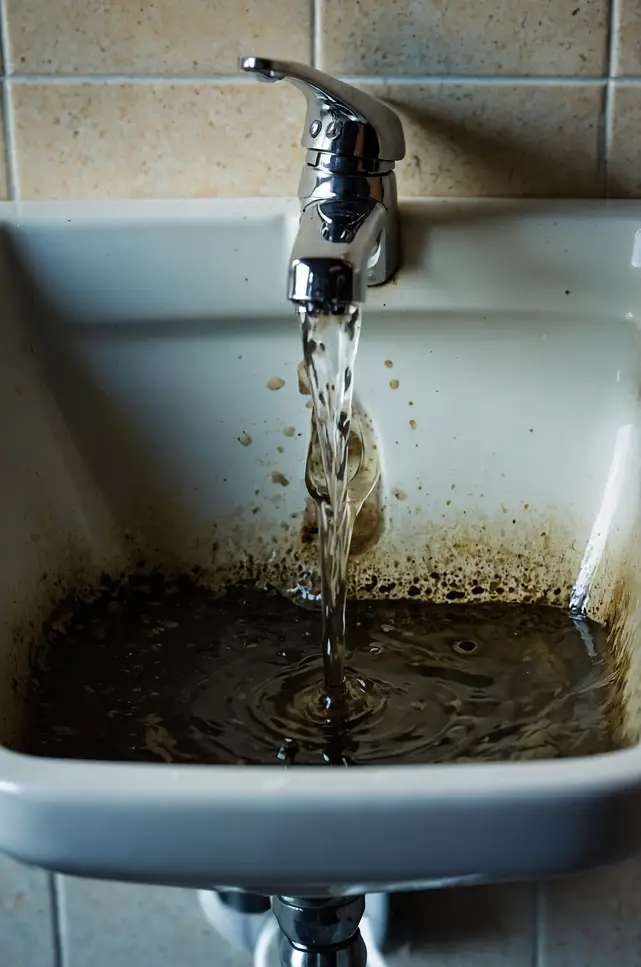
Sewage backup is the restoration event that nobody wants to talk about — and that too many property owners try to underestimate. The moment raw sewage enters your Franksville home or business, you are no longer dealing with a plumbing inconvenience. You are dealing with a Category 3 biohazard environment: bacteria, viruses, parasites, and pathogens that pose immediate health risks to anyone exposed, particularly children, elderly residents, and individuals with compromised immune systems.
911 Restoration of Southeast Wisconsin responds to sewage emergencies in Franksville in full PPE — hazmat suits, respirators, chemically resistant gloves and boots. Because that is what the situation requires. The "gross factor" is real. The health risk behind it is more real. And the consequence of inadequate remediation — hidden pathogen residue, secondary illness, and future mold growth from improperly treated materials — is the most real of all. Our Fresh Start promise applies here as much as anywhere: when we leave, your property is genuinely safe.
Franksville's Sewage Risk Landscape
Where Failures Happen in Franksville
Sewage backup in Franksville most commonly originates from private septic system failures and drain field saturation events during Racine County's wet seasons. Near Highway K and throughout the Highway K corridor, the specific conditions that drive these events are related to pole barn and agricultural building flooding — the same geography and infrastructure reality that creates Franksville's broader water damage risk profile. On the 27th Street corridor, high-volume usage and aging infrastructure create their own failure patterns.
Why Porous Materials Cannot Be Saved After Sewage Contact
This is the point that unlicensed or poorly trained operators most frequently get wrong. Carpet, drywall, insulation, wood flooring, and upholstered furniture that have contacted Category 3 sewage cannot be cleaned to safe levels. The pathogens in sewage penetrate porous materials at a depth that surface disinfection cannot reach. Any contractor who tells you they can "dry and treat" sewage-contaminated drywall or carpet is either uninformed or cutting corners. The only safe protocol is removal, proper disposal, and replacement.
The 45-Minute Containment Window
The faster sewage is extracted and the contamination zone is contained, the smaller the material footprint that requires removal. Our Fresh Start response speed — on-site within 45 minutes from our Racine headquarters — directly limits the scope of material removal your property requires. Every additional hour of unsupervised spread expands the remediation cost.
Our Sewage Cleanup Process — Category 3 Protocol, Full Compliance
Step 1 — Emergency Response in Full PPE (45 Minutes). Our technicians arrive in hazmat suits, respirators, and Category 3 PPE. We establish the contamination zone boundary and guide occupants and pets safely away. This is not a standard plumbing cleanup — and we arrive ready for exactly what it is.
Step 2 — Category 3 Extraction. Dedicated biohazard extraction equipment — not shared with standard water damage work — removes sewage water and solid material. All extracted matter is containerized in certified biohazard packaging for Wisconsin DNR-compliant disposal.
Step 3 — Removal of All Contaminated Porous Materials. Carpet, padding, drywall, insulation, and porous flooring in the contamination zone are removed and disposed of. No exceptions. We document all material removal for insurance purposes.
Step 4 — Hospital-Grade Surface Disinfection. All non-porous structural surfaces receive EPA-registered hospital-grade disinfectants at label-specified concentrations and verified dwell times. Dwell time compliance is documented — it is the most frequently skipped step in sewage cleanup and the most consequential for pathogen elimination.
Step 5 — Molecular Deodorization. Sewage odor compounds are eliminated using hydroxyl generation and HEPA air scrubbing — not masked with fragrance. Air treatment continues until odor markers clear to background levels.
Step 6 — Post-Remediation Testing and Documentation. Surface testing confirms pathogen reduction to safe levels. Written test results are provided for insurance, personal records, and — for commercial properties — health department compliance.
Step 7 — Full Reconstruction. We replace all removed materials and coordinate with plumbing contractors to confirm the sewage source is resolved before enclosed spaces are reconstructed.
From the Owner — To Franksville Property Owners Facing a Sewage Emergency
"When a septic system fails on a Franksville rural property, the isolation of the setting demands a response that is fast, fully equipped, and coordinated with the specific knowledge that rural biohazard situations require. My team brings that expertise and the proper Category 3 equipment — every single time.
When my team arrives at a Franksville sewage event, we bring the right equipment, the right chemistry, and the right protocol — because your family's safety and your property's integrity require nothing less. That is the Fresh Start commitment, even at its most difficult."
— Joe Minsky, Owner, 911 Restoration of Southeast Wisconsin
Sewage Cleanup FAQ — Franksville, WI
What should I do immediately after discovering a sewage backup in my Franksville property?
Stop using all water fixtures immediately. Keep family members and pets away from the affected area. Shut off the HVAC system if the contamination is near air returns. Call 911 Restoration at (262) 925-0000 — we will guide you through immediate safety steps while our team is in transit.
Does homeowners insurance in Wisconsin cover sewage backup damage?
Coverage typically requires a sewage backup or water/sewer endorsement on your policy. Many Franksville homeowners carry this rider. We help you identify applicable coverage and provide complete documentation for your claim.
Why can't I just clean up a small sewage backup myself in my Franksville home?
Any sewage event — regardless of apparent volume — introduces Category 3 pathogens into your environment. Without proper PPE, EPA-registered disinfectants at verified concentrations, and compliant material disposal, self-remediation risks ongoing health exposure and residual contamination that will expand over time.
How long does professional sewage cleanup take for a Franksville residential property?
A contained sewage event in an unfinished basement typically completes remediation in 1–2 days. Finished spaces involving material removal and reconstruction run 2–4 weeks depending on the scope of affected materials.
Sewage in Your Franksville Property Is a Biohazard Event. We Respond Accordingly.
Call (262) 294-6360 — We Answer 24/7/365 45-Minute Response | Category 3 Biohazard Certified | Full Compliance Documentation Serving Franksville, WI — The Highway K Corridor, The 27Th Street Corridor, and All Surrounding Areas