
5May
What Causes Basement Flooding? 6 Common Sources You Should Check
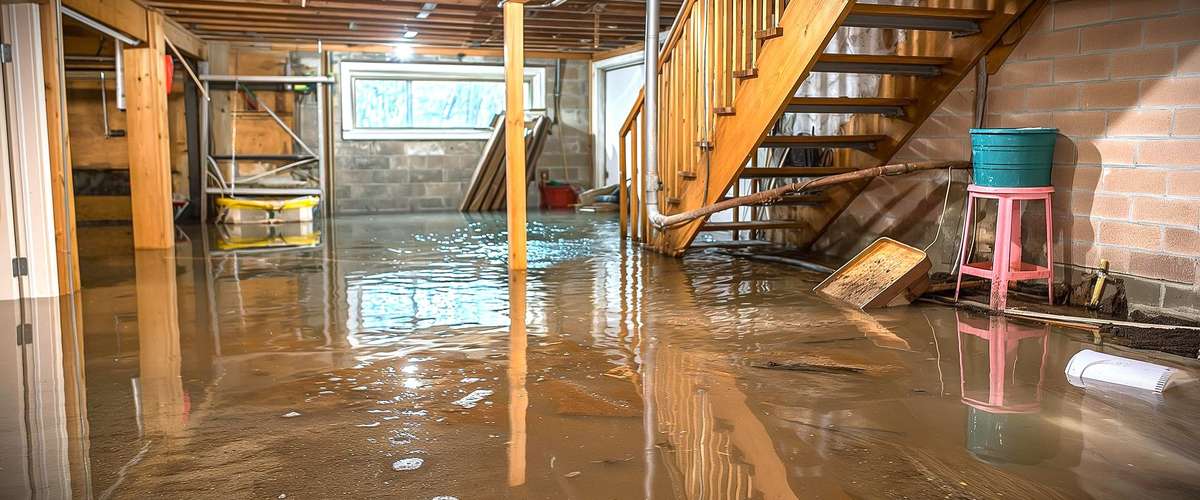
Basement flooding after heavy rain is most commonly caused by one of six sources: a failed or overwhelmed sump pump, foundation wall cracks, window well overflow, a backed-up floor drain, lateral line failure, or a failed appliance connection — and in Southeast Wisconsin, heavy clay soil dramatically increases the pressure that drives water through every one of those entry points.
If you're standing in your basement right now with water on the floor, this guide will help you identify where it came from, understand why it happened, and know exactly what you should do next.
Why Wisconsin Basements Flood: The Clay Soil Problem
Before walking through the six sources, it's important to understand the regional factor that makes basement flooding in Southeast Wisconsin fundamentally different from what homeowners in sandier-soil states deal with.
Southeast Wisconsin sits on a deep layer of heavy glacial clay — a soil type that absorbs water slowly and releases it even more slowly. During a heavy rain event or rapid spring snowmelt, water that cannot drain through the soil rapidly begins to accumulate against your foundation walls. This creates what engineers call hydrostatic pressure: the lateral force of water-saturated soil pressing against concrete, block, or stone foundation walls from the outside.
Hydrostatic pressure doesn't respect older waterproofing. It doesn't care that your basement was dry for the last five years. It will find every crack, every joint gap, every aging cove seal — and it will push water through. The heavier the clay, the more severe the pressure, and Racine, Kenosha, Muskego, and New Berlin all sit on some of the densest clay profiles in the region.
Source 1: Sump Pump Failure
The single most common cause of sudden basement flooding in Southeast Wisconsin is a sump pump that failed — or was never sized for the volume of water your pit receives.
Sump pumps are mechanical devices with finite lifespans (typically 7–10 years) and finite capacity. They fail for several reasons:
- Power outages during the exact storms that flood basements most severely
- Float switch failure — the mechanism that activates the pump stops triggering
- Burnout from continuous operation during extended rain events
- Frozen or clogged discharge line that prevents water from exiting the home
- Undersized pump overwhelmed by the volume of groundwater entering the pit
What to check: Is your pump running? If you hear it running but water is still rising, the pump may be overwhelmed or the discharge line may be blocked. If it's not running at all, test it manually by pouring water into the pit. If you have no backup battery system and your power went out, you likely found your answer.
A water damage restoration professional can assess sump pump failure aftermath and help you understand whether a battery backup or secondary pump system is warranted for your home.
Source 2: Foundation Wall Cracks
Wisconsin's freeze-thaw cycles are relentless. From November through April, foundation concrete expands when it freezes and contracts when it thaws — sometimes multiple times per week during transitional months. Over years, this cycle creates cracks in poured concrete walls and causes mortar joints in block foundations to deteriorate.
Cracks fall into two categories:
- Horizontal cracks — caused by soil pressure against the wall. These are the most structurally serious and require immediate evaluation.
- Vertical and diagonal cracks — typically caused by settlement or thermal cycling. Usually less structurally urgent but still active water entry points.
Water doesn't need a large opening. A hairline crack under sustained hydrostatic pressure will admit a meaningful volume of water into a basement over the course of a storm event. Look for:
- White mineral deposits (efflorescence) along cracks — evidence of historic water movement
- Damp, dark staining tracking down from a crack
- Active seepage or trickling during or after rain
What to check: Walk the perimeter of your basement walls after the next significant rain. Any staining, dampness, or active water movement at a crack point is a confirmed entry source.
Source 3: Window Well Overflow
Basement windows below or near grade level are surrounded by window wells — semi-circular barriers meant to hold back soil and provide drainage. When window wells fill with leaves, debris, and sediment, their drainage is compromised. During a heavy rain event, the well can fill with water and that water will find the window as its exit point.
Window wells are a frequently overlooked flooding source because homeowners don't think of windows as a water intrusion path. But even windows with functional weather seals are not designed to hold back standing water pressure.
What to check:
- Is the drain at the bottom of each window well clear and functional?
- Are the wells filled with debris, gravel that has compacted, or standing water after rain?
- Is the grade around each well sloping toward the house rather than away from it?
This is one of the more preventable flooding sources — proper well maintenance and a well cover can eliminate it entirely.
Source 4: Floor Drain Backup
Every basement with a floor drain is connected to the municipal sewer system. During a major storm event, that system can become overwhelmed — particularly in older communities like Racine and Kenosha where combined sewer systems carry both stormwater and sanitary sewage in the same pipe.
When the system is overwhelmed, wastewater can travel backward through the drain and into your basement. This is not just water — it is raw sewage, and it represents a Category 3 biohazard. If you see murky, foul-smelling water coming up through your floor drain, do not wade through it. This is a sewage backup, not a rainwater event, and it requires professional remediation.
What to check: Is the water coming up from the floor drain, or is it coming in from the walls and windows? Sewage backup water has a distinct odor. If your floor drain is the source, contact our team immediately — sewage cleanup requires certified biohazard protocols.
Source 5: Lateral Line Failure or Blockage
The lateral line is the underground pipe that connects your home's interior plumbing to the municipal sewer main in the street. In older Southeast Wisconsin homes, these lines were often installed in clay tile sections — a material that roots infiltrate aggressively, joints that shift with soil movement, and material that degrades over decades.
A partially or fully blocked lateral line will cause wastewater to back up into the lowest point of your home — typically the basement floor drain or the lowest toilet. Unlike a municipal system overflow (Source 4), lateral line failure happens even in dry conditions, though heavy rain can accelerate a partial blockage to a full one.
What to check: Has the basement drain backed up even during dry weather? Have you noticed gurgling from basement or first-floor drains? These are warning signs of lateral line issues that need a plumbing camera inspection.
Source 6: Appliance Hose and Water Line Failures
Not all basement flooding comes from outside. Water heaters, washing machines, water softeners, and dehumidifiers all have water supply and drain connections that can fail — hoses that crack, connections that loosen, and pans that overflow without a drain.
A slow supply line drip behind a finished wall can saturate drywall, framing, and subfloor over months before visible water appears on the floor. A washing machine with a deteriorating supply hose can fail suddenly and deliver dozens of gallons in minutes.
What to check:
- Inspect all appliance supply hoses for bulging, cracking, or mineral buildup at connections
- Confirm that your water heater's overflow pan has a functional drain
- Check that your dehumidifier's drain hose is properly routed and not kinked or disconnected
Stainless steel braided hoses have significantly longer lifespans than rubber hoses and are worth the upgrade in any basement appliance installation.
After the Water Comes In: What You Should and Shouldn't Do
If your basement has flooded, the next steps matter enormously for the outcome:
Do:
- Document everything with photos before moving anything
- Remove standing water as quickly as possible — time is the most critical factor in limiting mold growth
- Move salvageable items to dry ground
- Run dehumidifiers if you have them and power is safe
- Call a professional water damage restoration team
Do not:
- Enter a basement with standing water if there is any possibility of electrical hazard
- Assume the problem is solved once visible water is gone — materials remain wet and mold begins within 24–48 hours
- Use household fans to "dry out" — fans spread moisture and potential mold spores throughout the space
The structural drying that prevents mold growth requires professional-grade equipment: industrial dehumidifiers, air movers, moisture meters, and thermal imaging to locate water in wall cavities and flooring that isn't visible from the surface.
When to Call 911 Restoration of Southeast Wisconsin
Whether you're dealing with two inches of water from sump pump failure or a slow seepage that's saturated one wall over weeks, the clock is working against you. Water damage that isn't fully remediated within 24–48 hours creates the conditions for mold growth — and mold remediation is significantly more costly and invasive than water damage cleanup.
Our team serves Kenosha, Racine, Oak Creek, New Berlin, Muskego, Waterford, and the surrounding Southeast Wisconsin region with 24/7 emergency response, IICRC-certified technicians, and a 45-minute response commitment.
Contact 911 Restoration of Southeast Wisconsin now or visit our water damage restoration page to learn more about our response process. The sooner you call, the more we can save.
Latest Posts



Contact Us
For Advice
Need help? Talk to an expert
(262) 294-6360