

5May
Why Does My House Smell Like Something Is Burning After Using the Heater?
A burning smell from your heater at the start of the season is usually caused by dust burning off the heat exchanger — but if the smell is persistent, oily, or smoke-like rather than briefly dusty, it may indicate hidden soot deposits from a past fire event, a failing HVAC component, or smoke contamination that was never properly remediated.
That distinction matters. One is a minor seasonal annoyance. The others are legitimate safety and health concerns. This guide will help you identify which situation you're in and what you should do about it.
The Normal Scenario: First Heat of the Season
When you run your heating system for the first time after a summer of disuse, it is entirely normal to detect a brief, faint burning smell for the first 15 to 30 minutes of operation. Dust accumulates on the heat exchanger, burner elements, and ductwork surfaces throughout the warmer months. When the system fires up, that dust burns off and briefly releases a mild, dry, acrid odor.
This is not cause for alarm if:
- The smell is faint and dissipates within 20–30 minutes
- The smell is dry and dusty in character, not oily or smoke-like
- There is no visible smoke or haze in the air
- The smell does not recur once the system has been running for a few heating cycles
If all four of those conditions are true, you likely have nothing more than accumulated household dust burning off. Open a window, run the system through its cycle, and the issue typically resolves on its own.
The Concerning Scenario: Persistent, Oily, or Smoke-Like Odor
If the burning smell is persistent — returning every time the heat runs — or if it smells distinctly smoky, chemical, or acrid rather than simply dusty, you are in a different situation. Several specific causes warrant investigation.
Cause 1: Hidden Soot From a Past Fire Event
This is one of the least recognized sources of a recurring burning heater smell, and one of the most important to address.
Soot is microscopic. After any combustion event in a home — a kitchen fire, a chimney fire, a localized electrical fire in a wall — soot particles travel through the home's air and settle on every surface: inside ductwork, on furnace components, on the heat exchanger, and inside wall cavities that connect to the HVAC system. Homeowners who experienced a small fire, cleaned up the visible damage, and considered the matter closed may have left significant soot contamination in place.
When the heating system activates, it draws air across these soot-coated surfaces, heats them, and distributes the resulting particles and odors throughout the home. The smell is reliably reproduced because the source — soot-coated ductwork or furnace components — isn't going anywhere until it's professionally cleaned.
Soot is not merely a cosmetic problem. The particles are ultrafine, they penetrate lung tissue deeply, and prolonged exposure is associated with serious respiratory effects. If you've had any fire event in your home — even one that seemed minor — and the burning smell returns each heating season, the HVAC system and ductwork need a professional inspection.
Our fire damage restoration team encounters this scenario regularly: homeowners who addressed visible fire damage years earlier but never had their HVAC system and ductwork assessed for soot contamination.
Cause 2: A Micro-Fire or Electrical Event in the HVAC System Itself
Heating systems can experience their own internal combustion events — small enough that the homeowner is never aware they occurred, but large enough to coat internal components with soot and carbonized residue.
Common micro-fire sources in residential HVAC systems:
- Overloaded or failing electrical components in an older furnace — wiring insulation burns briefly and leaves carbonized residue on nearby surfaces
- Cracked heat exchanger — allows combustion gases (which contain soot and carbon monoxide) to mix with circulated air
- Clogged or partially blocked flue — causes combustion gases to back-draft into the furnace cabinet
- Pilot light or ignition issues — incomplete combustion deposits carbon on burner surfaces
A cracked heat exchanger is particularly serious because it is both a source of burning odor and a potential carbon monoxide pathway. If you cannot visually confirm that the burning smell is coming from a simple dust accumulation on an otherwise functional furnace, have the heat exchanger professionally inspected before continuing to run the system.
Cause 3: Past Water Damage and Moisture in the HVAC System
Here is a connection many homeowners don't make: water damage and burning smells are not mutually exclusive.
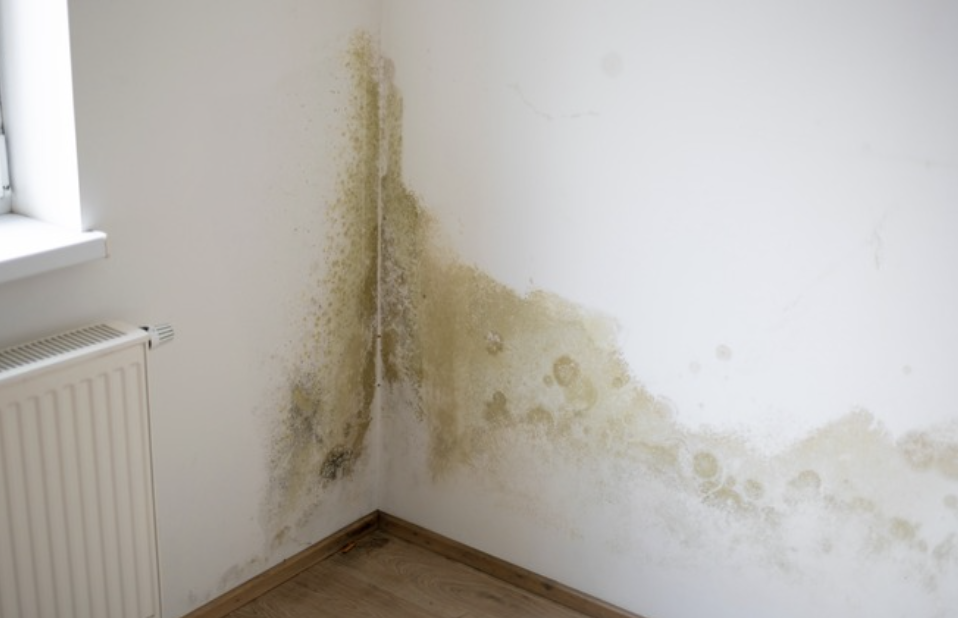
HVAC systems that have been exposed to moisture — from a flooding event, a roof leak above the air handler, a burst pipe near the ductwork — can develop mold and organic debris on duct surfaces. When those surfaces are heated during furnace operation, they can produce an odor that reads as musty or burning, or both simultaneously.
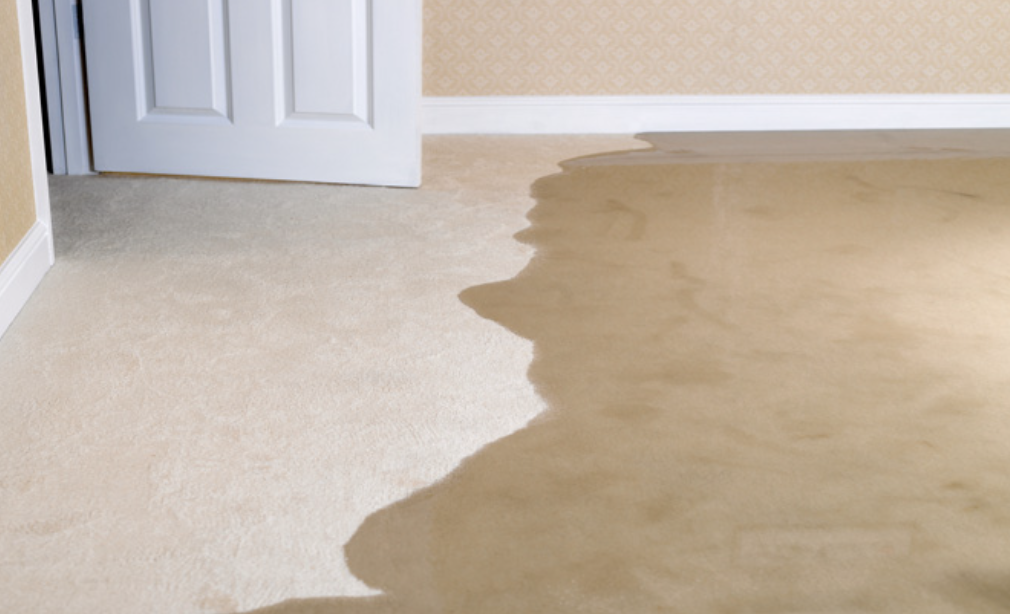
In Southeast Wisconsin, where basements flood frequently and HVAC air handlers are often basement-mounted, this scenario is not unusual. If you experienced any water intrusion near or in your mechanical room, and the burning odor began in subsequent heating seasons, the moisture history of your HVAC system is worth investigating.
Our water damage restoration team can assess whether your HVAC system was compromised by a previous moisture event and coordinate with appropriate specialists for ductwork cleaning and air handler remediation.
Cause 4: Foreign Objects or Pest Activity in Ductwork
Less dramatically, but worth mentioning: ductwork that hasn't been inspected in years can accumulate insulation debris, dead insects, small nesting materials from rodents, or other organic matter that produces a burning odor when heated air passes over it. This is particularly common in older homes with fiberglass duct liner that has begun to deteriorate.
If the smell appears to localize to certain registers or certain areas of the home, rather than being distributed uniformly, a foreign object or isolated duct debris may be the source.
How to Evaluate Your Situation
Ask yourself these questions:
- How long does the smell last? Less than 30 minutes on first seasonal startup — likely dust. Recurring throughout the heating season — requires investigation.
- How would you describe the smell? Dry and briefly acrid — dust. Oily, chemical, distinctly smoke-like — soot or component failure.
- Have you had any fire events in this home? Including small kitchen fires, chimney fires, or "close calls" that were handled informally — soot contamination of HVAC is possible.
- Have you had any water intrusion in your mechanical room or near ductwork? Organic debris and mold in ductwork is a possible cause.
- Is your carbon monoxide detector working? If you have any suspicion of a cracked heat exchanger or combustion gas issue, verify your CO detector is functional and replace it if you're uncertain. If the alarm sounds, evacuate immediately.
What to Do Next
If the smell is mild, brief, and present only on first seasonal startup: Replace your furnace filter, which may itself be a source of accumulated debris, and run the system through a few cycles. If it resolves, monitor and repeat next season.
If the smell is persistent, smoke-like, or accompanied by any other concerns: Do not continue running the system until a qualified HVAC technician has inspected the heat exchanger, burner assembly, and ductwork. If you have reason to believe past fire damage was not fully remediated — including ductwork assessment — contact a certified fire damage restoration company.
If you have ever had a fire in your home and didn't have ductwork and HVAC components professionally inspected as part of the restoration: The time to address that gap is before another heating season passes.
911 Restoration of Southeast Wisconsin Is Here to Help With Heater Odor
Whether you're dealing with the aftermath of a kitchen fire, a chimney incident, or a suspected HVAC contamination issue, our IICRC-certified team provides comprehensive fire damage restoration services throughout Racine, Kenosha, Oak Creek, Muskego, New Berlin, Waterford, and surrounding Southeast Wisconsin communities.
We assess soot contamination at every level — visible surfaces, hidden cavities, ductwork, and HVAC components — and restore your home to a condition where the air you breathe is genuinely clean.
Contact 911 Restoration of Southeast Wisconsin to schedule an inspection. Don't spend another heating season wondering what you're breathing.
Latest Posts



Contact Us
For Advice
Need help? Talk to an expert
(262) 294-6360