
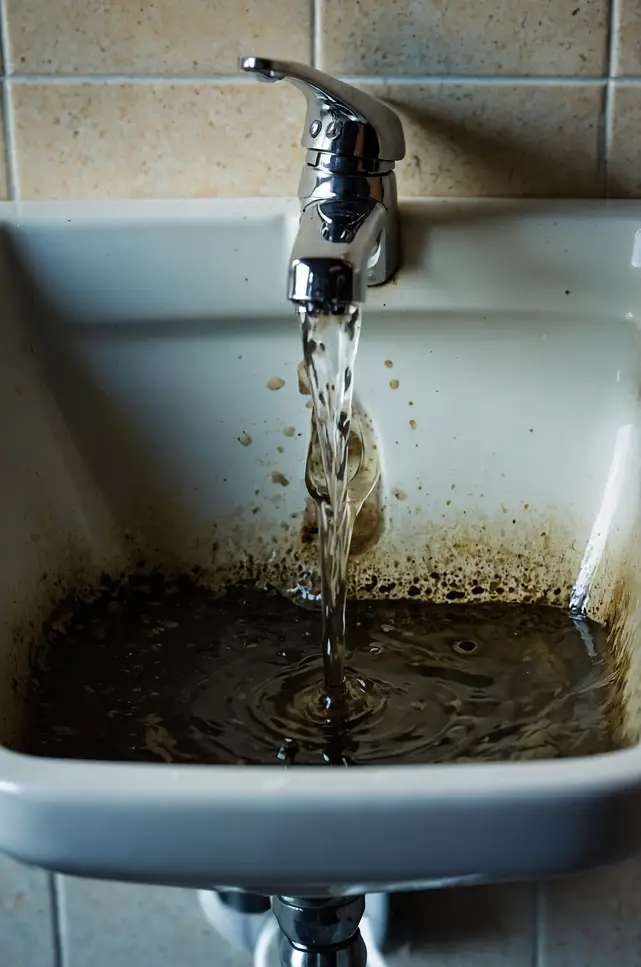
Sewage Cleanup in Caledonia, WI: Fast, Emergency Response
Septic Systems, Aging Laterals, and High Water Tables: Caledonia's Sewage Risk Is Uniquely Its Own.
In Caledonia's semi-rural communities — the rural residential stretches along 7 Mile Road, the agricultural-edge properties near the Franksville border, the established homes in the Tabor and Linwood areas — sewage emergencies don't always follow the same script as they do in densely serviced suburbs. A significant portion of Caledonia properties still rely on private septic systems rather than municipal sanitary sewer connections. Others sit on older municipal laterals that have been under consistent stress from the high water tables and soil movement associated with the Root River corridor. Both conditions create sewage backup risks that require a specific understanding of Racine County's semi-rural infrastructure reality.
When a septic system surcharges during a wet season. When a drain field saturates and waste has nowhere to process. When a private lateral cracks under frost heave and collapses between your home and the municipal connection. The result, in every case, is a Category 3 biohazard event in your home. 911 Restoration of Southeast Wisconsin responds to sewage emergencies across all of Caledonia within 45 minutes — equipped and certified to handle the full remediation from extraction through reconstruction, with the specific knowledge of what semi-rural Racine County sewage events actually look like.
The Sewage Risk Landscape in Caledonia, WI
Private Septic System Failures
Properties in Caledonia that rely on private septic systems face failure risk from multiple directions. Drain fields can saturate and fail during extended wet seasons — particularly in soils near the Root River corridor that are already operating at high moisture saturation. Septic tanks can surcharge when incoming volume exceeds the drain field's absorption capacity, pushing waste backward through the system toward the lowest drain in the home. Aging tanks that have not been pumped on schedule can develop outlet baffle failures that accelerate system backup.
High water table conditions — a persistent reality in many parts of Caledonia — are particularly damaging to drain field function. When the water table rises above the drain field's effective absorption zone, the field cannot process effluent and the system backs up. This can happen without any increase in household water use — driven entirely by external groundwater conditions.
Municipal Lateral Vulnerabilities
Caledonia properties that connect to municipal sanitary sewer via private laterals face their own set of risks. Many older laterals in the Tabor, Linwood, and Highway 31 corridor areas were installed in clay tile — a material that degrades under decades of soil movement, root intrusion, and freeze-thaw pressure. Clay tile laterals can partially collapse or develop joint failures that create partial blockages, which eventually lead to backup events during periods of higher-than-normal household water use or during municipal system surcharge events following heavy rainfall.
Groundwater Infiltration into Sewer Infrastructure
In high water table areas of Caledonia near the Root River corridor, groundwater infiltration into older municipal sewer infrastructure is a documented phenomenon. When the water table rises significantly during flood events, groundwater can enter the municipal system through infrastructure deterioration points — increasing system load and creating surcharge conditions that can back up into connected properties. This is an external risk that individual homeowners cannot control — but can be prepared to respond to professionally.
Our Sewage Cleanup & Biohazard Remediation Process — IICRC Category 3 Protocol
Step 1 — Emergency Response and Safe Containment (45 Minutes). Our technicians arrive in full personal protective equipment and immediately assess the contamination zone. We isolate the affected area from occupants and pets, and identify whether the sewage source has been stopped at origin — coordinating with your plumber or septic contractor if the source requires mechanical intervention before remediation can begin.
Step 2 — Category 3 Extraction. All sewage water and solid waste material is extracted and removed using equipment dedicated exclusively to Category 3 biohazard work. Extracted material is containerized and disposed of in full compliance with Wisconsin DNR regulations for biohazard waste. This is not standard wet-vac work.
Step 3 — Removal of All Contaminated Porous Materials. Every porous material that came into contact with sewage — carpet, carpet padding, drywall, insulation, porous concrete block, wood flooring — is removed and disposed of. There is no approved remediation method for restoring porous materials contaminated by Category 3 sewage. Any contractor who offers to "clean and dry" contaminated carpet or drywall is offering you a health liability.
Step 4 — Hospital-Grade Disinfection of All Structural Surfaces. Concrete floors, block walls, metal framing, and all non-porous structural surfaces are treated with EPA-registered disinfectants at documented concentrations and dwell times. We follow IICRC S500 Category 3 application protocols — dwell time compliance is verified and recorded, not estimated.
Step 5 — Deodorization and Air Treatment. Sewage odor compounds are eliminated at the molecular level using hydroxyl generation and HEPA air scrubbing — not masked with deodorant products. Air treatment continues until odor markers return to background levels, verified by technician assessment.
Step 6 — Post-Remediation Testing and Documentation. Surface testing verifies that residual contamination markers have been reduced to safe levels before reconstruction begins. Written test results are provided, suitable for insurance documentation and occupant re-entry authorization.
Step 7 — Full Reconstruction and Septic/Lateral Coordination. We rebuild all removed materials and coordinate directly with your plumber, septic contractor, or lateral repair service to confirm that the sewage source has been resolved before enclosed spaces are reconstructed. A restored basement above an unresolved septic failure is a temporary solution.
Franchise Owner Joe Minsky — To Caledonia Homeowners With a Sewage Emergency
"Septic failures are some of the most stressful calls we respond to — and some of the most misunderstood. I've been to Caledonia properties where a homeowner tried to handle a septic backup themselves with a shop vac and a bottle of bleach. I understand the impulse. But Category 3 sewage isn't a plumbing mess. It is a biological hazard, and treating it without the right equipment, chemistry, and disposal protocols doesn't make the problem go away — it buries it in materials and corners that will become a health issue for your family months down the road. When you call us after a sewage event near the Franksville border, along 7 Mile Road, or anywhere in the Caledonia township, you get a team that understands the difference between a municipal surcharge backup and a failed drain field backup — because the remediation implications are different. We respond fast, we work safely, and we document everything you need for your insurance claim. That's the Fresh Start promise on the worst kind of day."
— Joe Minsky, Owner & IICRC-Certified Restoration Specialist, 911 Restoration of Southeast Wisconsin
Sewage Cleanup FAQ — Caledonia, WI
My Caledonia property has a private septic system that backed up into the basement. What should I do immediately?
Stop using all water fixtures in the home immediately — toilets, sinks, laundry, and dishwasher — to prevent additional volume from entering the backed-up system. Keep family members and pets out of the affected area. Call 911 Restoration at (262) 925-0000 and your septic service contractor simultaneously. We will coordinate arrival so remediation can begin as soon as the source is addressed.
Does homeowners insurance in Wisconsin cover septic system backup damage?
Standard homeowners policies in Wisconsin typically exclude sewage backup unless a specific water/sewer backup endorsement has been added. Policies with this endorsement cover damage from sewage backup regardless of whether the source is municipal surcharge or private septic failure. We help you identify applicable coverage and provide complete documentation for your claim.
The sewage backup in my Caledonia home came through the floor drain, not from an overflowing toilet. Is it still Category 3?
Yes. Any sewage that has originated from a sanitary system — whether delivered through a floor drain, a toilet overflow, or any other pathway — is classified as Category 3 (black water) contamination. The entry point does not affect the contamination category. All materials in contact require the same Category 3 remediation protocol.
Can you work on our property while the septic contractor is also present assessing the system?
Yes. We routinely coordinate on-site with septic contractors, plumbers, and lateral repair crews. We sequence our work to avoid conflict with mechanical repairs while progressing remediation in unaffected areas of the contamination zone. Efficient coordination on-site reduces total time to completion.
A Sewage Event in Caledonia Requires Certified Response — Not a Mop and a Prayer.
The longer Category 3 contamination remains in your home, the more materials require removal and the higher the remediation cost. 911 Restoration of Southeast Wisconsin is on call right now.
Call (262) 294-6360 — We Answer 24/7/365 45-Minute Response | Category 3 Biohazard Certified | Full Septic & Lateral Coordination Serving Caledonia, WI — Tabor, Linwood, 7 Mile Road, Franksville & Sturtevant Border Areas