

23Jul
Orange Mold in Your Bathroom: What Wisconsin Homeowners Need to Know
Orange mold in a bathroom is most commonly caused by Rhodotorula — a fast-spreading yeast-like organism — or early-stage Acremonium fungal growth, both of which thrive in the warm, poorly ventilated conditions of bathrooms that don't fully dry between uses. In Wisconsin, where homes are closed up for months at a time during winter and basement bathrooms are common in older construction throughout Waukesha, Milwaukee, Racine, and Kenosha counties, the conditions that allow orange mold to establish itself are more prevalent than many homeowners realize.
This guide covers what orange bathroom mold is, why Wisconsin homes are particularly susceptible, when it's a surface problem versus a structural one, and what it takes to get rid of it for good.
What Causes Orange Mold in Bathrooms?
Several different microorganisms produce the orange or reddish-orange color associated with bathroom mold. The most common in Wisconsin homes:
- Rhodotorula — A yeast (not a true mold) that produces orange-pink pigment. Extremely common in shower grout, around drains, and on soap scum surfaces. It spreads quickly wherever moisture persists and returns rapidly after cleaning if the underlying conditions aren't changed.
- Acremonium — A true mold appearing in orange, white, or gray tones. Found in caulk seams, shower pan edges, and behind fixtures. Can produce mycotoxins and causes respiratory irritation with prolonged exposure.
- Trichoderma — Less common on bathroom surfaces but found in water-damaged drywall behind tile, particularly in basement bathrooms with slow foundation seepage or plumbing leaks.
All three thrive when three conditions are present simultaneously: moisture, warmth, and organic material (soap residue, skin cells, mineral buildup). Wisconsin bathrooms that go weeks without thorough ventilation during the winter months, or basement bathrooms that never reach the same drying temperatures as above-grade spaces, regularly create all three conditions at once.
Why Wisconsin Homes Are More Susceptible
Bathroom mold is a universal problem, but several factors make Wisconsin homes particularly prone to it.
Closed-house winters. From November through March, most SE Wisconsin homeowners keep windows shut and ventilation minimal. Exhaust fans that work adequately in warmer months may not run long enough or frequently enough during cold weather, when occupants are reluctant to let warm air escape. Moisture from showers accumulates in bathroom air longer than it should, and the high-humidity indoor air that results becomes a mold resource.
Basement bathrooms. Full basements are standard in SE Wisconsin construction, and many homes have a bathroom — full or half — in the basement. Basement spaces run cooler, have less natural air circulation, and are closer to foundation moisture sources than above-grade rooms. A basement bathroom in a Waukesha or Racine home is among the most mold-prone spaces in any Wisconsin house, particularly if there's any foundation seepage or elevated basement humidity.
Older housing stock. Many homes throughout Milwaukee, Racine, and Kenosha counties were built in the early-to-mid 1900s with bathroom ventilation that pre-dates modern code requirements. Single exhaust openings that vent into the attic rather than exterior, bathroom windows that are now painted shut, and exhaust fans that haven't been serviced in years are all common — and all contribute to the moisture accumulation that orange mold requires.
Great Lakes summer humidity. SE Wisconsin experiences genuinely high humidity from June through August, particularly in communities near Lake Michigan. Even with good ventilation, bathrooms in high-humidity periods absorb ambient moisture that allows mold to persist between cleanings.
Is Orange Mold in a Bathroom Dangerous?
Orange bathroom mold isn't as alarming as a major black mold discovery, but it isn't benign either. Rhodotorula is classified as an opportunistic pathogen — it poses limited risk to healthy adults but is a genuine concern for people with compromised immune systems, those undergoing cancer treatment, and anyone with asthma or chronic respiratory conditions. Prolonged daily inhalation of mold spores in an enclosed shower environment increases irritation risk for anyone. For a broader look at what household mold does to health, our guide on mold health effects covers the range of symptoms and risks in detail.
Where Orange Mold Appears in Wisconsin Bathrooms
Orange mold concentrates wherever moisture collects and organic material provides nutrients. In Wisconsin bathrooms, the most common locations are:
- Shower grout lines — The porous surface of grout in both above-grade and basement showers holds moisture for hours after use and provides an ideal surface for Rhodotorula.
- Caulk seams — At the tub/wall transition, shower pan edges, and around fixture bases. Caulk that has cracked or is lifting away from the surface traps water and becomes a persistent mold site.
- Ceiling corners — Particularly in bathrooms where the exhaust fan is undersized or vents into the attic. Steam rises and collects where two walls meet the ceiling.
- The underside of plastic shower liners — The dark, trapped space between a fabric or plastic liner and the tub surround is frequently overlooked and can harbor significant mold growth before it becomes visible on the outer surface.
- Basement bathroom floors and walls near the base — In basement bathrooms with any foundation moisture or floor drain issues, orange mold will establish at floor level, near the base of walls, and around the drain surround.
Surface Mold vs. Structural Mold: How to Tell the Difference
Surface orange mold on grout and caulk is a different situation than mold that has penetrated behind tile, into wall cavities, or inside drywall. The distinction matters because surface mold can be cleaned; structural mold requires professional remediation.
Signs the problem is surface-level: mold appears only on visible, accessible surfaces; it responds temporarily to cleaning products even if it returns quickly; the tile and grout feel solid and the walls around the shower are firm.
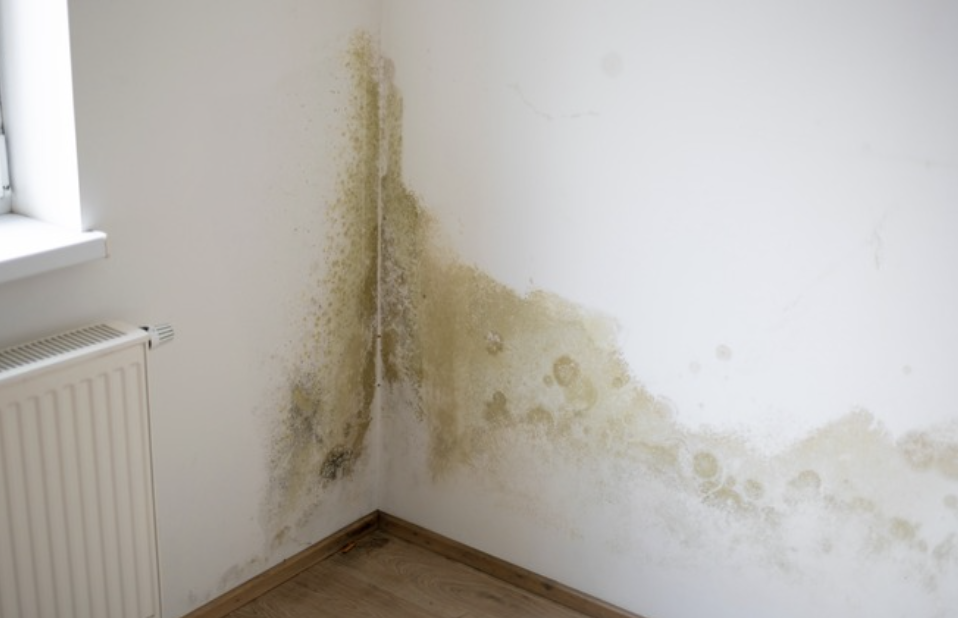
Signs the mold has gone deeper: mold reappears within days of cleaning regardless of the product used; grout or caulk crumbles when touched or pulls away from the tile; the wall surface feels soft or spongy adjacent to the shower; there's a persistent musty smell even after cleaning; or there's discoloration visible at the base of bathroom walls extending into the drywall.
In basement bathrooms, a third possibility exists: mold on the lower half of bathroom walls may be driven by foundation seepage rather than shower humidity. This is a water intrusion problem at the structural level, not a ventilation problem, and requires foundation assessment alongside mold remediation.
DIY Removal: When It's Appropriate
For surface mold on a limited area of grout or caulk — less than 10 square feet — DIY removal with proper precautions is reasonable. Apply undiluted white vinegar or a diluted bleach solution (1 cup per gallon of water), allow 10–15 minutes of dwell time, scrub with a stiff bristle brush, and rinse thoroughly. Wear gloves and ventilate the space during cleaning.
Two caveats apply. First, if the mold is established within the caulk itself rather than just on the surface, the caulk must be removed and replaced — scrubbing the surface won't eliminate the organism inside the material. Second, cleaning addresses visible growth but does not fix the underlying conditions. Orange mold removed from Wisconsin bathroom grout will return within weeks if ventilation isn't improved and moisture isn't consistently reduced.
When Professional Mold Remediation Is Needed
Professional intervention is appropriate when: the mold persists immediately after cleaning; any signs of structural penetration are present; the bathroom is in a basement with any history of moisture, seepage, or flooding; the affected area exceeds 10 square feet; or any occupant has respiratory sensitivities or immune system vulnerabilities.
For bathrooms in Wisconsin homes that have experienced any water damage event — a pipe burst, ice dam, or basement flooding — mold in the bathroom should be evaluated in the context of the larger water intrusion. Mold in a bathroom following a water damage event may be a symptom of ongoing moisture in adjacent walls or the subfloor. Our guide on mold after water damage covers how these situations are typically assessed. The 911 Restoration SE Wisconsin mold removal team can evaluate both the bathroom mold and any connected water damage in a single visit.
How to Prevent Orange Mold From Coming Back
Long-term prevention in Wisconsin's climate means controlling bathroom humidity even during the months when opening windows isn't practical:
- Run the exhaust fan during every shower and for 20–30 minutes after. Confirm it vents to the exterior — not the attic. This single step eliminates more mold-conducive conditions than any cleaning product.
- Have the fan inspected if it's older. Exhaust fans lose efficiency over time. A fan that sounds like it's running may be moving very little air due to worn bearings or a clogged duct.
- Replace caulk on a regular schedule rather than cleaning over it. Old caulk is a mold reservoir; new caulk is a clean surface. Plan to replace bathroom caulk every 2–3 years.
- Use a squeegee on shower walls after use. Removing surface water from tile after every shower dramatically reduces the moisture available for mold growth.
- For basement bathrooms, run a dehumidifier in the basement to maintain humidity below 50% during summer months. This addresses the ambient moisture that basement bathrooms can't control through ventilation alone.
Frequently Asked Questions
Is orange mold in the bathroom the same as pink mold?
They're often caused by the same organism — Rhodotorula — which produces pigments ranging from pink to salmon to orange depending on environmental conditions and growth stage. The removal approach and health considerations are the same.
Why does orange mold in my Wisconsin bathroom come back so fast after cleaning?
Cleaning removes visible mold but not the spores present in the air and in porous surfaces like grout. In Wisconsin homes that are closed up for winter with limited ventilation, the conditions that allow mold to grow are continuously re-created after each cleaning. Fixing ventilation is the only lasting solution — cleaning is maintenance, not a cure.
Can orange mold in my bathroom spread to other areas of the house?
Mold spores travel through the air and can deposit in other areas with favorable conditions. In Wisconsin homes with connected basement and first-floor air circulation, mold spores from a basement bathroom can spread to other basement spaces. Maintaining low humidity throughout the home — particularly in basements — limits the risk of spread.
My basement bathroom had orange mold after the spring flooding. Is that related?
Almost certainly. Flooding introduces moisture into walls, subfloor, and framing that creates ideal mold conditions for weeks afterward, even if the visible water is removed quickly. Mold following a flooding event should be assessed as part of the broader water damage, not treated as a separate bathroom cleaning issue. See our guide on spring flooding in SE Wisconsin for context on the moisture impact of these events.
Contact 911 Restoration of SE Wisconsin for Bathroom Mold Assessment
Orange mold that keeps coming back — or that you suspect has spread behind the tile — needs a professional assessment to understand the full scope. 911 Restoration of SE Wisconsin provides mold removal and inspection services throughout Waukesha, Milwaukee, Racine, and Kenosha counties. If there's also a connected water damage issue, we assess both at once. Contact us to schedule a professional evaluation.
Latest Posts



Contact Us
For Advice
Need help? Talk to an expert
(262) 294-6360