
9Jun
What to Do With Mold After Water Damage
Mold can begin growing within 24 to 48 hours of water damage if moisture isn't properly extracted and structural materials aren't dried - making professional water damage restoration within the first day critical to preventing a mold problem from developing alongside the original water damage.
In Southeast Wisconsin, this window is especially important to understand. Whether you've had a burst pipe in January, a sump pump failure in March, or a basement flood during a summer storm in Racine County, Milwaukee, or Waukesha County - the clock starts the moment water makes contact with your building materials. What happens in the next 24 to 48 hours determines whether you're dealing with a water damage job or a water damage and mold remediation job.
Why Mold Grows So Fast After Water Damage
Mold doesn't need much to get started. It needs moisture, a food source (any organic material - drywall paper, wood framing, carpet backing), and temperatures above about 40°F. Most of the materials in a home satisfy the food source requirement. The only missing ingredient before water damage is the moisture.
Once that moisture is present, mold spores - which are always present in the air at low levels in any building - begin germinating and colonizing within 24 to 48 hours under the right conditions. A Wisconsin basement in spring, with absorbed concrete, damp framing, and temperatures in the 50s and 60s, is close to ideal for mold growth.
By 72 hours, early mold colonies may be visible on drywall paper or insulation facing. By one week without intervention, mold can penetrate porous materials deeply enough that surface cleaning alone is insufficient - those materials typically need to be removed.
Why "Drying It Out" Isn't Enough
This is the most important thing to understand about water damage and mold prevention: surface drying is not the same as structural drying.
When water from a burst pipe or basement flood soaks into your home, it doesn't stay at the surface. Water travels through drywall, into wall cavities, along wood framing, under flooring, and through insulation. Even if the visible floor is dry within a day or two, moisture content inside these materials may remain elevated for weeks without professional equipment.
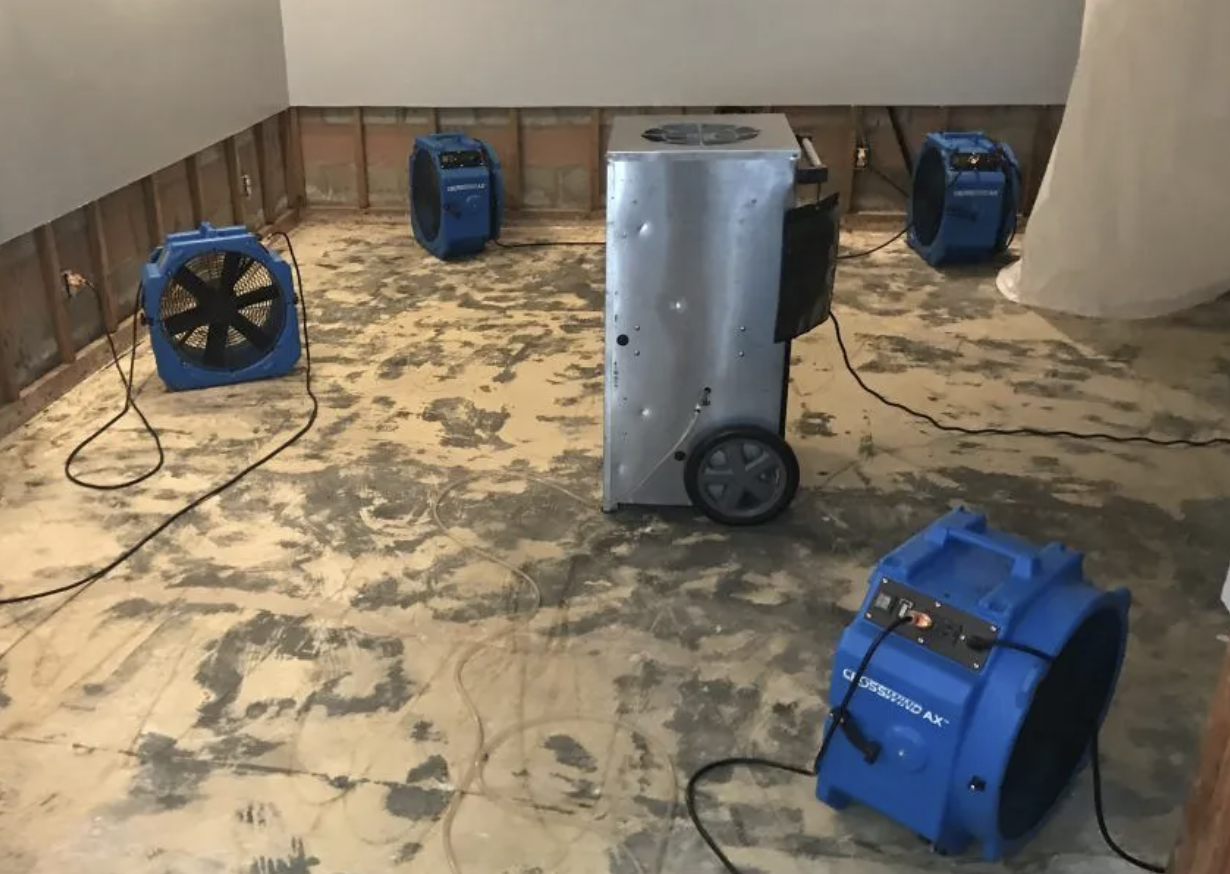
A $50 fan from the hardware store moves air across surfaces. Industrial air movers, dehumidifiers, and drying mats create a drying system that pulls moisture from inside building materials - not just off the surface. Without that depth of drying, mold grows in the wall cavity or under the flooring while the surface above looks and feels dry.
By the time you notice a smell or see visible growth, mold is already established.
The Materials Most at Risk in a Wisconsin Home
Not all building materials respond to water damage the same way. In typical SE Wisconsin residential construction, the materials with the highest mold risk after water damage are:
Drywall
The paper facing on standard drywall is one of mold's preferred food sources. Once drywall has been wet and not fully dried within 24 to 48 hours, it typically needs to be removed rather than dried in place - the paper facing retains moisture and supports mold growth even after the surface feels dry.
Fiberglass Batt Insulation
Insulation that has been wet loses its R-value and creates a persistent moisture reservoir behind walls and under floors. Wet batt insulation almost never dries properly in place and is usually recommended for replacement after significant wetting. It's also invisible - you won't see the problem until mold has been growing for some time.
Wood Framing
Structural lumber is more resilient than drywall but still vulnerable to mold if moisture levels stay elevated. Framing that's dried within 48 hours using professional equipment can typically be saved. Framing that's remained wet for a week or more may show mold growth that requires treatment before it can be dried and enclosed again.
Carpet and Carpet Padding
Carpet padding is essentially a sponge - it absorbs and holds water and almost never dries completely without removal. After significant flooding, carpet padding is nearly always replaced. Carpet itself can sometimes be saved if dried quickly, but any delay significantly reduces that window.
Concrete Block and Poured Foundations
While concrete itself doesn't support mold growth, it stays damp longer than other materials and creates persistent high-humidity conditions in the surrounding space. Basements with flooded concrete need active dehumidification maintained until moisture readings confirm the concrete has returned to normal levels.
Signs Mold Has Already Started After Water Damage
If water damage wasn't addressed with professional drying immediately, watch for these indicators that mold may have already established:
- Musty odor that persists even after the visible water is gone - this is often the earliest detectable sign of mold growth inside walls or under flooring
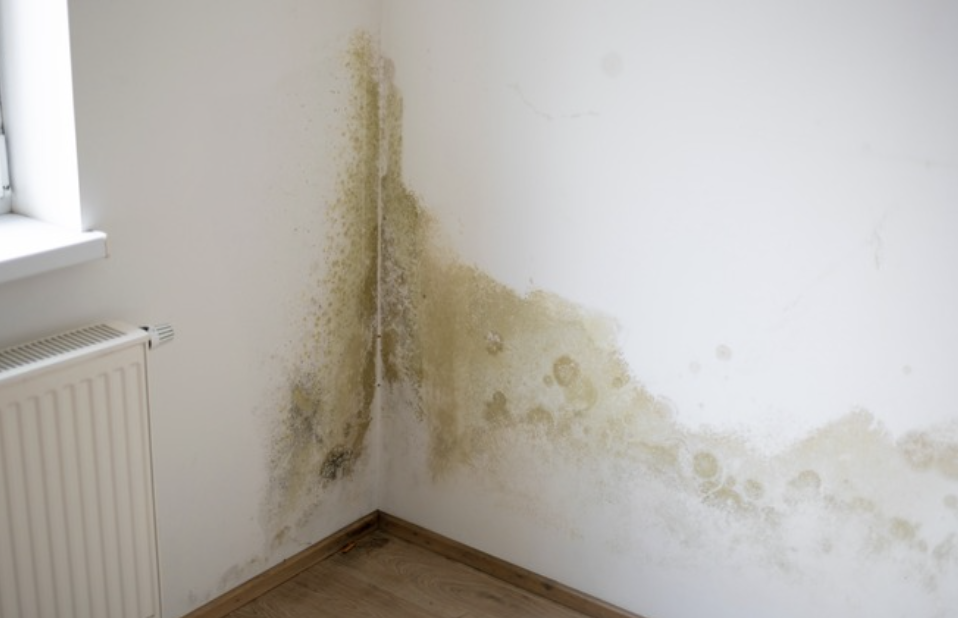
- Visible discoloration - black, green, gray, or white spots on drywall, wood, or insulation facing
- Warping or bubbling drywall - this indicates persistent moisture inside the wall
- Increased allergy or respiratory symptoms in household members, particularly when indoors
- A moisture meter reading above 16% in drywall or wood after more than a week since the water event - professional drying should have this below 12-14%
If you're noticing any of these signs after a recent water event, contact us for a mold inspection. Early identification limits the scope of remediation significantly.
The Right Sequence: Water Damage and Mold Prevention
Preventing mold after water damage isn't complicated - it's a matter of executing the right steps quickly:
- Extract all standing water immediately using professional equipment, not household tools
- Begin structural drying within hours of extraction - air movers and dehumidifiers placed to create active drying conditions inside walls and under floors
- Monitor moisture levels daily using calibrated moisture meters to confirm drying progress and catch any areas that aren't responding
- Remove wet materials that won't dry in time - flooring, insulation, and drywall that are too saturated to dry within the mold window are cut out and removed before they become a mold problem
- Apply antimicrobial treatment to affected framing and surfaces after drying is confirmed
- Confirm with final moisture readings before any reconstruction closes walls or floors
This is the sequence 911 Restoration follows on every water damage restoration job in SE Wisconsin. The goal isn't just to make the space look dry - it's to confirm it actually is dry before anything gets enclosed again.
What If Mold Has Already Developed?
If mold is already visible or suspected after a water damage event - whether it happened recently or weeks ago - the situation still needs to be addressed, but the approach changes. Mold remediation involves:
- Containment of affected areas to prevent spore spread during work
- Removal of mold-impacted materials (drywall, insulation, framing if necessary)
- HEPA vacuuming and antimicrobial cleaning of the affected area
- Air filtration to capture airborne spores during the process
- Addressing the remaining moisture problem - because mold always comes back if the moisture source isn't resolved
- Post-remediation testing to confirm clearance
The key thing to know: if there's been water damage that wasn't professionally dried, and there's now a musty odor or visible growth, that requires a mold remediation process - not just more drying. Both issues need to be addressed together, and we handle both.
SE Wisconsin's Climate Makes This More Urgent, Not Less
It's tempting to think that Wisconsin's cold winters slow mold growth enough to extend the response window. They do - somewhat. Mold growth is slower at 45°F than at 70°F. But Wisconsin's spring and summer seasons, when most sump pump failures and storm flooding occur, are warm enough that the standard 24 to 48 hour window applies fully.
And in winter, when burst pipes are most common, the interior of a home stays at 65°F or warmer. The water damage happened inside - where it's warm. Mold grows where the water is, not where the outdoor temperature is.
Act Fast - We're Ready 24/7
911 Restoration of Southeast Wisconsin responds to water damage emergencies throughout Milwaukee, Racine County, and Waukesha County around the clock. Every hour that passes after water damage increases the likelihood of mold development and the scope of remediation required.
If you've had water damage and are concerned about mold - or if you want professional drying started before mold has a chance to develop - call us now at (262) 294-6360. We're available 24/7/365 with a 45-minute response time across Franklin, Racine, Waukesha, Brookfield, New Berlin, Muskego, Milwaukee, Greenfield, and surrounding Southeast Wisconsin communities.
Latest Posts



Contact Us
For Advice
Need help? Talk to an expert
(262) 294-6360