
2Jul
What to Do After a House Fire in Wisconsin
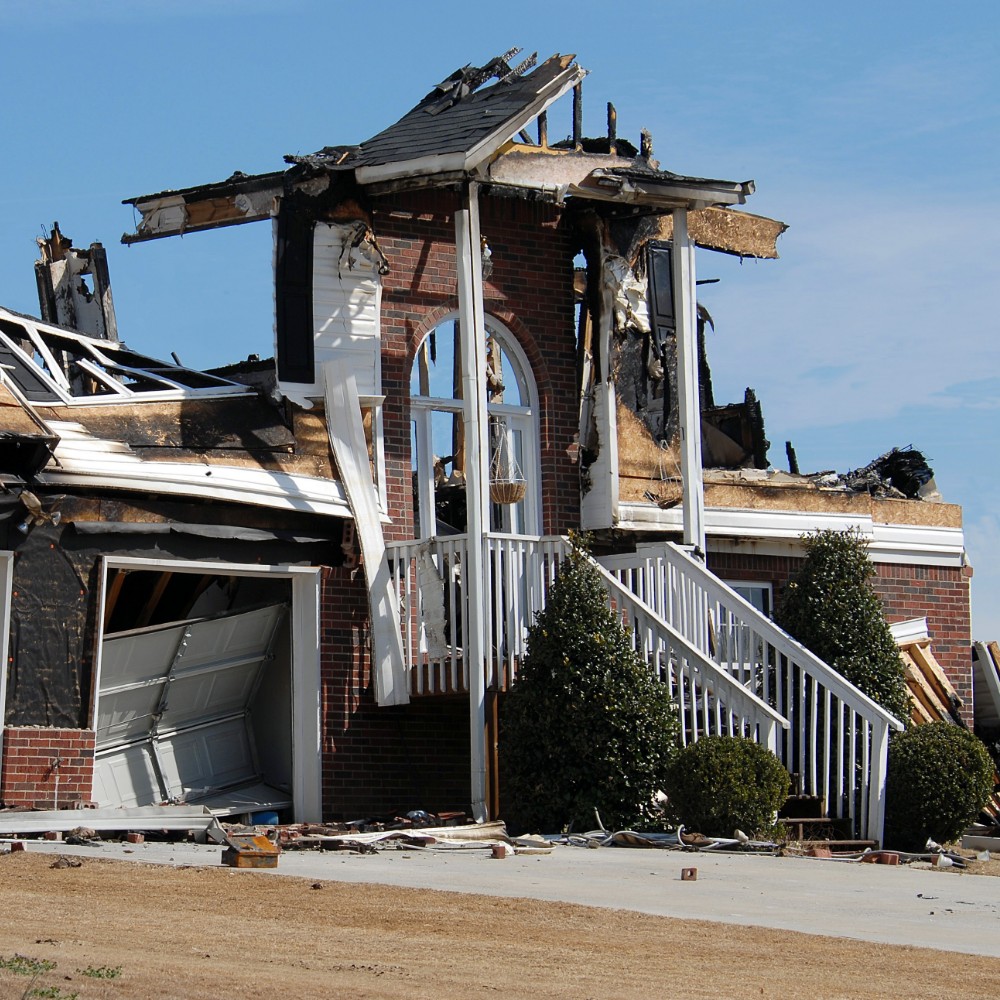
After a house fire in Wisconsin, the most important first step — before re-entering, before calling your insurance company, before anything else — is waiting for the fire department to officially clear the structure as safe, then calling a licensed fire damage restoration company within 24 hours, because acidic smoke and soot residue begins permanently etching surfaces, embedding into porous materials, and destroying what could otherwise be restored within hours of extinguishment, and every hour without professional intervention narrows the list of what can be recovered.
For homeowners in Milwaukee, Waukesha, Racine, Kenosha, and across southeastern Wisconsin, house fires carry a specific seasonal context: a disproportionate share of Wisconsin's residential fires occur between November and March, driven by the heating equipment, wood-burning stoves, and space heaters that SE Wisconsin households rely on through long, cold winters. Whether the fire started in a furnace room, a fireplace, or from a space heater left too close to a curtain, the restoration process that follows is the same — and the steps you take in the first 24 to 72 hours determine how much of your home and your possessions survive it.
Step 1: Do Not Re-Enter Until the Structure Is Officially Cleared
After a structural fire, the fire department secures the scene. Before they leave, ask explicitly: Has the structure been cleared for re-entry? If you receive a red placard, the structure is unsafe — do not enter for any reason. If you receive a yellow placard, entry may be limited and conditional. Green placard means cleared for re-entry, but that clearance does not mean the air inside is safe to breathe without respiratory protection.
Post-fire structural hazards that are not visible from the outside:
- Structural compromise from heat damage. Fire weakens wood framing, metal connectors, and load-bearing assemblies in ways that aren't visible on the surface. Roof trusses, floor joists, and wall framing can lose significant structural capacity while appearing intact. Wisconsin winters add a compounding factor: snow load on a fire-weakened roof structure can cause collapse that wouldn't occur on the same structure in summer.
- Electrical hazards. Even with the main breaker off, heat-damaged wiring can re-energize as it cools. The utility company may need to disconnect service at the meter before the electrical system is safe. Do not restore power or test outlets in a fire-damaged home before a licensed electrician assesses the system.
- Toxic air quality. The combustion of household materials — insulation, carpet, synthetic furniture, electronics, plastics, cabinetry — produces a complex mix of toxic gases and particulates that remain inside a closed structure long after the fire is out. Hydrogen cyanide from burning synthetics, carbon monoxide from incomplete combustion, and benzene from burning plastics are all present at dangerous concentrations inside an unventilated fire-damaged structure. An N95 respirator is minimum protection for even brief re-entry; a P100 half-face respirator is appropriate for extended time inside.
- Smoldering in concealed spaces. Fire can continue smoldering inside wall cavities, insulation, and between floor assemblies for hours after visible flames are extinguished. Wisconsin's cold winter temperatures actually make this worse in some cases — cold exterior air through broken windows can fan smoldering materials that otherwise would have gone out.
Step 2: Secure the Property Against Weather and Entry
In southeastern Wisconsin, this step takes on added urgency that it doesn't have in warmer climates: a fire-damaged structure in December, January, or February is exposed to conditions that cause rapid secondary damage.
Winter-specific concerns after a Wisconsin house fire:
- Frozen water from firefighting. Fire suppression in Wisconsin winters means significant water in and around the structure that freezes within hours. Water that has penetrated wall cavities, soaked insulation, and collected on flat surfaces freezes and expands, causing additional damage to materials that might otherwise have been salvageable. Extraction and drying equipment must be deployed quickly before freezing locks moisture into structural assemblies.
- Heat loss through fire damage. A structure with broken windows, damaged walls, or a compromised roof loses heat rapidly in Wisconsin winter conditions. Pipes in unheated sections of the home can freeze within hours of the heating system going offline — creating a burst pipe emergency on top of the fire damage. Emergency board-up that re-establishes the thermal envelope is not just a security measure; it's pipe protection.
- Snow load on a compromised roof. If the fire damaged the roof structure, snow accumulation after the fire — even a moderate snowfall — adds load to a structure that may no longer be engineered to carry it. Emergency tarping and temporary structural support prevent a damaged roof from becoming a collapsed roof.
- Property security. Fire-damaged properties in Milwaukee, Racine, and surrounding communities are frequently targeted for theft within 24 to 48 hours of a fire. Copper wiring, appliances, tools, and personal property that survived the fire are at risk in an unsecured structure.
911 Restoration of SE Wisconsin deploys emergency board-up, tarping, and stabilization as part of our fire damage response across southeastern Wisconsin, 24 hours a day. We can have a crew on-site within hours of your call — including through the night during winter storm conditions.
Step 3: Document Before Touching Anything
Once the structure is cleared and secured, documentation is the most consequential action you can take before cleanup begins. The photos and video you capture before anything is moved, cleaned, or disposed of are the primary evidence for your insurance claim — and fire damage claims in Wisconsin can run from tens of thousands to hundreds of thousands of dollars depending on the scope. Thorough early documentation is what supports that claim accurately.
Document before any sorting, cleaning, or removal begins:
- Every room affected by fire, smoke, soot, or water from firefighting — from multiple angles, including close-ups of all affected surfaces
- All structural damage: roof, exterior walls, windows, doors, framing visible through damaged areas
- Every item of personal property that was damaged or destroyed — clothing, electronics, furniture, appliances, tools, documents
- The exterior of the structure from all four sides, including the roof as visible from ground level
- The area of fire origin if visible and safely accessible
Video walkthroughs with spoken narration capture context and spatial relationships that photographs alone miss. Timestamps are automatic. Take more documentation than you think is necessary.
Step 4: Understand Why Smoke and Soot Damage Accelerates After the Fire Is Out
The fire being out does not end the fire damage. Smoke and soot residue continues damaging surfaces through chemical reactions that proceed rapidly in the hours and days following extinguishment:
- Acidic soot corrosion. Combustion byproducts include sulfur dioxide and other acidic compounds deposited throughout the structure as fine soot particles. These acids begin etching metal surfaces — appliances, plumbing fixtures, door hardware, light fixtures — within hours of the fire. Chrome and stainless steel that could be cleaned within 24 to 48 hours may be permanently pitted after 72 hours. Copper and aluminum surfaces fare worse.
- Protein film from burning organic materials. Fires involving food, upholstery, wood, or other organic materials deposit an invisible film on surfaces that produces a severe, persistent odor and requires specialized enzymatic or chemical treatment to neutralize. Standard cleaning accelerates the bonding of protein residue to surfaces rather than removing it.
- Soot penetration into porous materials. Fine soot particles migrate over time into drywall, wood framing, carpet, clothing, and upholstery. A structure remediated within 24 hours recovers significantly more porous material than one addressed after several days, because penetration depth increases with time.
- HVAC system contamination. Smoke that entered ductwork during the fire is redistributed throughout the structure every time the HVAC system runs. Running heating in a fire-damaged Wisconsin home before the HVAC system is professionally cleaned spreads soot into rooms that were not directly affected.
Step 5: Call a Fire Damage Restoration Company — Not a General Contractor
A general contractor rebuilds after fire damage. A fire damage restoration company does everything that has to happen before rebuilding — and produces the documentation that determines how the insurance claim is paid.
Professional fire damage restoration scope includes:
- Emergency stabilization: Board-up, tarping, winter weatherization, structural shoring as needed
- Firefighting water extraction and structural drying: Significant water enters a structure during fire suppression. In a Wisconsin winter, this water freezes in wall cavities, floors, and structural assemblies if not extracted promptly. Professional drying equipment addresses hidden moisture before it causes secondary structural damage and mold growth when spring arrives.
- Smoke and soot cleaning: Multiple cleaning methods applied in sequence depending on material type — dry chemical sponges, wet cleaning agents, HEPA vacuuming, and ozone treatment. The method selection matters: wrong technique on certain soot types sets staining permanently.
- Content pack-out: Personal property is inventoried, photographed for the insurance claim, packed, and transported to a controlled facility for professional cleaning and ozone treatment. Clothing, soft goods, documents, and electronics that appear destroyed are often recoverable through professional content restoration.
- Odor remediation: Thermal fogging and hydroxyl treatment penetrate wall cavities and HVAC systems where surface cleaning doesn't reach. This step is what separates a home that smells clean from one where smoke odor returns every time the heat runs.
- Scope of loss documentation: A comprehensive, itemized report of all affected materials with restoration and replacement costs — the document your insurance adjuster uses to calculate the settlement.
Common Causes of House Fires in Southeastern Wisconsin
Understanding the fire's cause matters for your insurance claim, for fire marshal documentation, and for preventing recurrence:
- Heating equipment failures. Furnace malfunctions, cracked heat exchangers, and burner failures are the leading cause of heating-related house fires in Wisconsin. The combination of aging heating equipment — particularly in Milwaukee's older housing stock — and the extended periods of heavy use that Wisconsin winters demand creates elevated failure risk. Annual furnace inspection and maintenance is not optional in SE Wisconsin.
- Wood-burning stoves and fireplaces. Creosote accumulation in chimney flues from wood-burning equipment is a leading cause of chimney fires that spread to the structural framing around the flue. Many older homes in Waukesha County and the Milwaukee metro have wood-burning equipment that has not been professionally cleaned in years. A chimney fire in Wisconsin winter often occurs while the house is occupied and can spread rapidly.
- Space heaters. Portable electric space heaters are involved in a significant percentage of residential fires nationally — from contact with combustibles, from overloaded circuits, and from units that tip over during operation. Wisconsin's cold winters increase the use of space heaters significantly, particularly in homes where the primary heating system has been deferred for repair.
- Electrical system failures. Knob-and-tube wiring, aluminum wiring, and overloaded panels in Milwaukee's and Racine's older housing stock are a persistent source of electrical fires. Wisconsin's extreme cold affects electrical insulation over time, and the additional load of winter heating can push aging electrical systems into failure.
- Kitchen fires. The leading cause of residential fires nationally year-round; unattended cooking and grease fires are the most common kitchen fire scenarios in Wisconsin homes as in homes everywhere.
Does Wisconsin Homeowners Insurance Cover House Fire Damage?
Yes — fire is the most reliably covered peril in a standard Wisconsin homeowners policy (HO-3). Unlike water damage, which has significant exclusions based on source and cause, structural fire damage is covered under the dwelling coverage section of virtually every Wisconsin homeowners policy.
What a standard Wisconsin HO-3 covers after a house fire:
- Dwelling coverage (Coverage A): Repair and reconstruction of the structure, including all affected structural assemblies, systems, and finishes, up to the dwelling coverage limit
- Personal property (Coverage C): Damaged or destroyed belongings, including furniture, clothing, electronics, appliances, and tools, up to the personal property limit. Contents documentation is what drives this payment — the more thorough your pre-claim documentation, the more accurately it is valued.
- Additional Living Expenses (ALE / Coverage D): Hotel costs, meals, and other reasonable living expenses while the home is uninhabitable during restoration. In SE Wisconsin, where restoration timelines stretch through winter due to fire-plus-weather complexity, ALE coverage is important to understand and use. Keep all receipts.
- Smoke damage to unaffected rooms: Rooms that were not directly in the fire path but sustained smoke and soot contamination are covered as part of the same fire event.
- Water damage from firefighting: Water used to extinguish the fire is treated as part of the covered fire loss, not as a separate water damage claim with its own deductible or exclusion analysis.
What NOT to Do After a House Fire in Wisconsin
- Don't restore power or run the HVAC system before a licensed electrician inspects the system and the ductwork is assessed for smoke contamination
- Don't attempt soot cleaning with household products. Water on certain dry soot types smears and sets the stain; ammonia-based cleaners react with certain soot types and worsen penetration. Leave surface cleaning to professionals with the right products for the specific soot profile.
- Don't discard any damaged items before they are inventoried and photographed for the contents claim, even items that appear completely destroyed
- Don't accept an initial settlement offer before the full restoration scope is established. Fire damage frequently reveals additional damage — in wall cavities, attic spaces, and structural assemblies — during professional assessment and demolition. Supplemental claims are normal and appropriate; accepting an early settlement before scope is complete forecloses this option.
- Don't leave the structure unsecured through a Wisconsin winter. Secondary water damage from broken windows and compromised roofing, plus pipe freeze damage, can exceed the original fire damage in cost if the structure is left open in cold weather.
911 Restoration of SE Wisconsin: Fire Damage Response Across the Milwaukee Metro
911 Restoration of SE Wisconsin provides comprehensive fire damage restoration services across Milwaukee, Waukesha, Racine, Kenosha, Brookfield, Wauwatosa, Menomonee Falls, New Berlin, Franklin, Oak Creek, Cudahy, South Milwaukee, Muskego, Pewaukee, and communities throughout southeastern Wisconsin. Our IICRC-certified team responds 24/7 — including during winter storm conditions — with emergency board-up, winter weatherization, firefighting water extraction, structural drying, smoke and soot cleaning, content pack-out, odor remediation, and complete reconstruction.
Call us immediately after a fire — we dispatch emergency crews around the clock and coordinate directly with your Wisconsin insurance adjuster from the first response. Learn more about our fire and smoke damage restoration services, our water damage mitigation for firefighting water intrusion, and our 24/7 emergency response capabilities.
Latest Posts



Contact Us
For Advice
Need help? Talk to an expert
(262) 294-6360