
9Jun
How Much Does Water Damage Restoration Cost in Wisconsin?
Water damage restoration in Wisconsin typically costs between $1,500 and $7,000 for a standard residential job, with the final price driven by the category of water involved, the square footage affected, and whether the damage requires structural drying only or also includes mold remediation or reconstruction.
If you've just dealt with a burst pipe, sump pump failure, or basement flood, you're probably trying to get a realistic number before calling your insurance company or deciding how to proceed. This breakdown covers what actually drives the price in Milwaukee, Racine County, and Waukesha County - with no inflated ranges, no hidden fees buried in fine print, and no pressure to commit before you understand what you're looking at.
The Three Cost Categories You Need to Understand
Every water damage job in Wisconsin breaks down into three separate components. Many homeowners assume restoration is one thing with one price - it's actually three distinct phases, each with its own cost driver.
1. Water Extraction and Emergency Services
This is the immediate response work: stopping the water source, extracting standing water, and beginning the drying process. This phase is typically billed based on the volume of water, the square footage affected, and whether any specialty equipment (submersible pumps for deep flooding, truck-mounted extractors for large areas) is required.
- Minor flooding (one room, limited water): $300-$700
- Moderate flooding (multiple rooms or full basement, 1-4 inches): $900-$2,500
- Major flooding (extensive basement or multi-area flooding): $2,500-$5,000+
2. Structural Drying
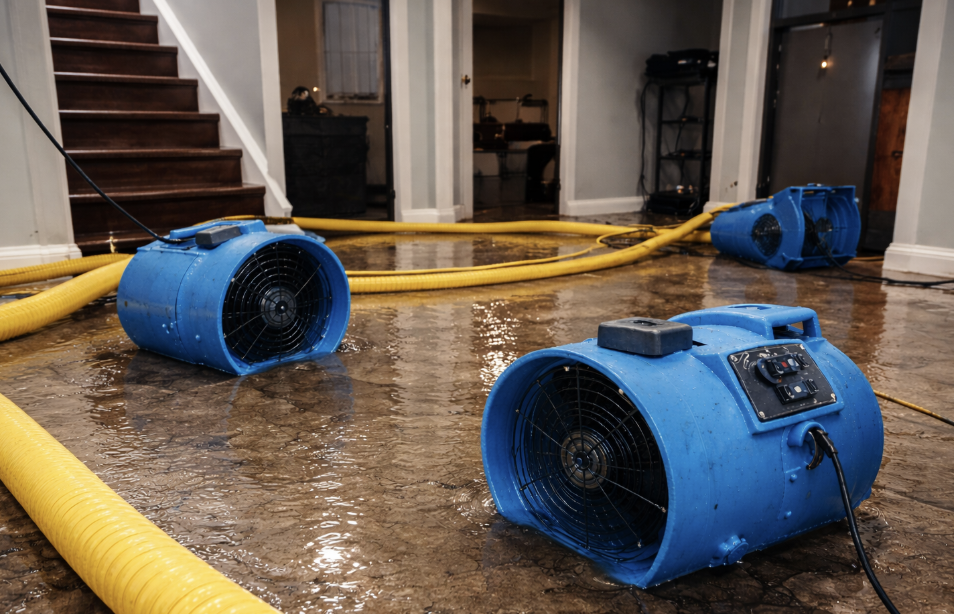
This is the phase most homeowners underestimate. After water is extracted, industrial air movers, dehumidifiers, and moisture monitoring equipment run continuously - often for 3 to 5 days - to dry wall cavities, subfloors, framing, and insulation that surface drying won't reach.
Structural drying is typically priced by the number of equipment pieces placed and the number of days required. In Wisconsin, cold-weather jobs can take longer because building materials absorb and release moisture differently when temperatures are low.
- Standard drying job (1-2 rooms, 3 days): $500-$1,500
- Extended drying job (basement, multiple rooms, 5+ days): $1,500-$3,500
3. Repairs and Reconstruction
After drying is complete and moisture levels confirm the structure is dry, any damaged materials - drywall, flooring, insulation, cabinetry, trim - are repaired or replaced. This phase varies the most widely because it depends entirely on what was damaged.
- Minor repairs (drywall patch, paint, trim): $300-$1,000
- Moderate reconstruction (flooring replacement, drywall sections, insulation): $1,500-$5,000
- Significant reconstruction (full basement finish rebuild, structural damage): $5,000-$20,000+
How Water Category Affects Your Total Cost
The source of the water has a direct impact on cost because different water types require different safety protocols and equipment. Restoration professionals classify water damage in three categories:
Category 1 - Clean Water
Water from a supply line, clean pipe burst, or overflow from a clean source. The least expensive to remediate because it poses no contamination risk. Extraction, drying, and repairs are straightforward.
Category 2 - Gray Water
Water that may contain contaminants - dishwasher or washing machine overflows, toilet overflow without solid waste, some types of sump overflow. Gray water requires additional safety precautions and antimicrobial treatment, which adds to the cost. Typically 20-40% more expensive than a comparable Category 1 job.
Category 3 - Black Water
Sewage backup, floodwater from outside, or any water that has been standing long enough to grow bacteria. Black water is the most expensive to remediate because it requires full Category 3 containment protocols - PPE, specialized cleaning agents, and in many cases, removal of porous materials (drywall, carpet, insulation) that can't be safely cleaned and dried. For more on sewage backup specifically, see our sewage cleanup service page.
What Makes a Water Damage Job More Expensive?
Several factors push costs above the baseline ranges:
- Delay between the damage and the call. Water that's been sitting for 24-48 hours has already begun causing secondary damage - swelling drywall, warping wood, and potentially beginning mold growth. The longer water sits, the more materials need to be removed rather than dried.
- Finished basements. Unfinished basement flooding is significantly less expensive to restore than a finished basement with flooring, drywall, trim, and built-ins. The SE Wisconsin home inventory skews heavily toward finished basements, which is why basement flooding jobs here tend toward the higher end of cost ranges.
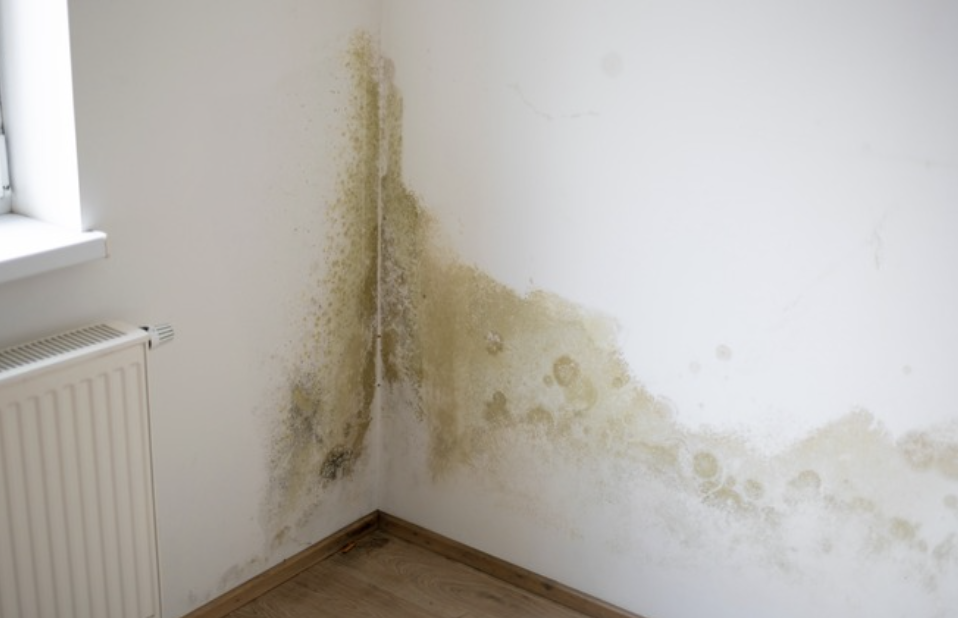
- Mold development. If water damage has led to visible mold growth - or if moisture levels indicate conditions that require mold remediation - this is a separate cost on top of the water damage restoration. Catching damage early is the most effective way to prevent mold from adding to your total.
- Multiple affected levels. Water that travels from an upper floor down to a lower floor affects twice the square footage and twice the materials, which roughly doubles the scope of the job.
What Does Insurance Typically Cover in Wisconsin?
Standard Wisconsin homeowners insurance generally covers sudden and accidental water damage - burst pipes, appliance failures, roof leaks from storm damage. What's typically not covered without additional endorsements:
- Basement flooding from groundwater or sump pump failure - requires a water backup endorsement
- Overland flooding from rain or rivers - requires a separate NFIP flood policy
- Gradual leaks that were ignored - "sudden and accidental" is the test; long-term slow damage is typically excluded
- Mold from a pre-existing or neglected moisture problem - mold that results from a covered event may be covered; pre-existing mold generally isn't
The most important step you can take for your insurance claim is to document damage thoroughly with photos and video before any cleanup begins. Our team works directly with all major Wisconsin insurers and can help document the scope of damage in a format that supports your claim. See our insurance information page for more detail on how the process works.
Typical Total Costs for Common SE Wisconsin Scenarios
To give you a more concrete sense of what common jobs actually cost in the Milwaukee, Racine, and Waukesha area:
- Burst pipe in one room, caught within a few hours: $1,500-$3,000 (extraction + drying + minor drywall repair)
- Sump pump failure, finished basement, 4-6 inches of water: $3,500-$8,000 (extraction + extended drying + flooring + drywall)
- Basement flooding, unfinished, 6 inches of water: $1,500-$4,000 (extraction + drying + concrete sealing)
- Appliance leak (dishwasher/washing machine) caught same day: $800-$2,000 (extraction + targeted drying)
- Category 3 sewage backup, single bathroom area: $2,500-$6,000 (containment + removal of porous materials + drying + antimicrobial treatment)
How to Get an Accurate Quote for Your Home
The ranges in this post are honest estimates based on typical SE Wisconsin jobs - but no two water damage situations are identical. The actual cost for your home depends on your specific square footage, the materials involved, how long water has been present, and what category the water source falls into.
The only reliable way to know what you're looking at is a professional assessment. 911 Restoration of Southeast Wisconsin provides free on-site evaluations for properties throughout Milwaukee, Racine County, and Waukesha County - including Racine, Waukesha, Brookfield, New Berlin, Franklin, Greenfield, Muskego, Caledonia, Mount Pleasant, and surrounding communities.
Call us at (262) 294-6360 for an honest assessment with no pressure and no obligation. We'll walk your property, explain exactly what needs to happen, and give you a clear picture of what it will cost - before you commit to anything.
Latest Posts



Contact Us
For Advice
Need help? Talk to an expert
(262) 294-6360