

2Jul
Ice Dam Water Damage in Wisconsin: What It Is, What It Costs, and What to Do
Ice dam water damage in Wisconsin occurs when heat escaping through the roof melts snow above the attic space, the meltwater flows down toward the cold eaves and refreezes into a ridge of ice, and that ice dam then backs water up under the shingles and into the attic, wall cavities, and living spaces below — causing hidden structural damage to insulation, drywall, and framing that often isn't discovered until warm weather reveals staining, mold growth, or failed ceilings weeks after the original ice event.
For homeowners in Milwaukee, Waukesha, Racine, Kenosha, Brookfield, Menomonee Falls, New Berlin, Oak Creek, and across southeastern Wisconsin, ice dams are a recurring winter reality. SE Wisconsin's climate — with its combination of heavy snowfall, significant temperature swings between daytime highs and overnight lows, and the accumulated snowpack that builds through January and February — is among the most ice dam-prone environments in the country. Understanding how ice dams form, what damage they cause, and how to respond when water starts coming through a ceiling in January is the knowledge that separates a manageable winter restoration from a major structural repair project.
How Ice Dams Form — The Physics Behind the Damage
Ice dams are a roofing and insulation problem before they are a water damage problem. The formation process requires three specific conditions that southeast Wisconsin reliably provides every winter:
- Snow accumulation on the roof. A snow layer of two inches or more provides the raw material for ice dam formation. Milwaukee averages over 47 inches of snowfall per season, with Waukesha County and inland areas often exceeding that. Heavy snow events in January and February — the peak months for ice dam damage in SE Wisconsin — can deposit 6 to 18 inches of snow on roofs in a single storm.
- A warm roof surface above the attic and cold eaves below it. This is the critical condition, and it is caused by heat loss from the living space below. When a home's attic is inadequately insulated or ventilated, heat from the living space below warms the roof deck above the insulated area. This warm zone melts the snow resting on it. The meltwater flows toward the eaves, which extend beyond the thermal envelope of the house and are therefore cold — at or near outdoor air temperature. When the meltwater reaches the cold eave, it refreezes.
- Repeated freeze-thaw cycling. Each cycle adds ice to the dam. Over several days of the typical SE Wisconsin winter weather pattern — daytime temperatures climbing toward freezing while nighttime temperatures fall back below it — the dam grows from a thin bead of ice at the gutter line into a thick ridge that traps water behind it.
Once the dam is established, water pools behind it and has nowhere to go but under the shingles. Asphalt shingles are designed to shed water that flows down a slope — they are not sealed against water that pools and backs up horizontally under them from below. Once water breaches the shingle layer, it enters the roof assembly and begins saturating the underlayment, roof decking, insulation, and eventually the ceiling and wall assemblies below.
What Ice Dam Water Damage Looks Like Inside Your Home
The interior signs of ice dam water intrusion are often delayed — water that entered the roof assembly in January may not appear as ceiling staining until February or March, or may not become visible at all until spring when temperatures rise and the ice dam melts entirely. By the time a homeowner sees water staining on an interior ceiling, the damage inside the wall and roof assembly above it is typically significantly more extensive than the visible stain suggests.
Common interior signs include:
- Water staining on ceilings near exterior walls, particularly in upper-floor rooms directly below the roof line. The staining typically appears in the corner where the ceiling meets an exterior wall — exactly where ice dams deposit water when it migrates under the shingle line.
- Wet or sagging drywall on upper-floor ceilings. A bulging ceiling section with discoloration indicates significant water accumulation above it — a section that can fail suddenly if the water volume becomes sufficient. A bulging ceiling should be relieved by piercing carefully with a screwdriver over a bucket before it collapses on its own.
- Water running down interior walls near windows on upper floors. Water that enters at the eave line can migrate down the wall cavity, appearing as streaking on interior wall surfaces or pooling at baseboard level.
- Damaged interior paint or plaster that bubbles, peels, or discolors in a pattern that follows the exterior wall line on the top floor of the home.
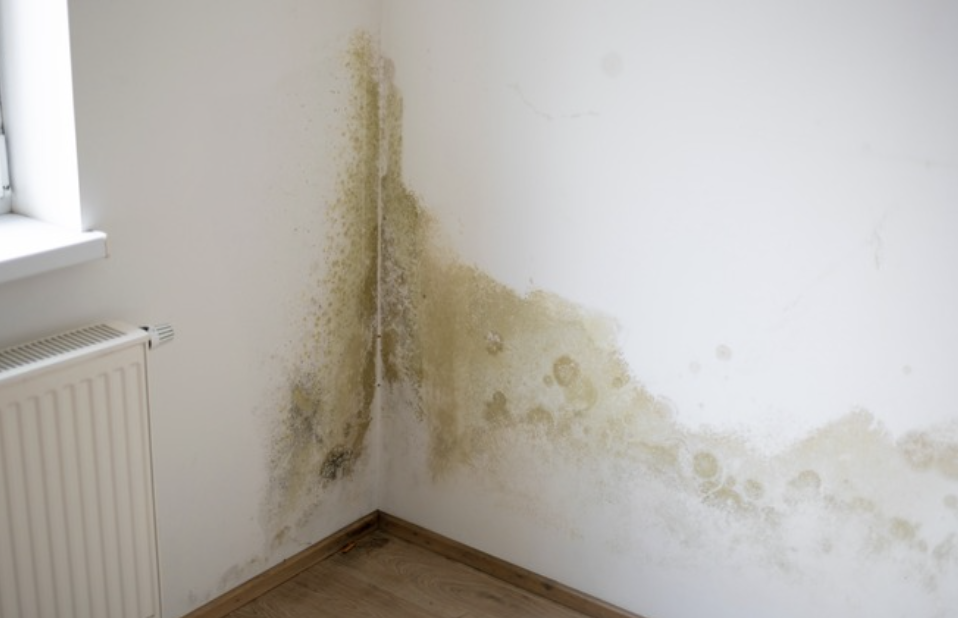
- Musty odor developing in February or March, particularly in attic spaces. This indicates that ice dam water saturated attic insulation and created conditions for mold growth in the insulation and on the roof decking — a finding that's common in SE Wisconsin homes with ice dam histories.
Which Homes in SE Wisconsin Are Most Vulnerable
Not every home in Milwaukee or Waukesha is equally susceptible to ice dam damage. The risk factors that increase vulnerability:
- Older homes with inadequate attic insulation. Many homes in Milwaukee's established neighborhoods — the North Shore communities, West Allis, Wauwatosa, South Milwaukee, and older Waukesha County suburbs — were built before modern energy codes established minimum attic insulation requirements. Attics with R-19 or less insulation lose significantly more heat than those meeting current R-49 to R-60 Wisconsin requirements, creating larger and more persistent warm zones on the roof deck above.
- Complex roof geometries. Valleys, dormers, skylights, and L-shaped roof lines create areas where snow accumulates deeper and where ice can dam against a vertical surface. A simple gable roof in SE Wisconsin may see minimal ice dam activity while a neighboring home with multiple dormers experiences significant damage from the same winter event.
- Inadequate or blocked attic ventilation. Continuous soffit-to-ridge ventilation maintains a consistent cold temperature across the entire roof deck, which prevents the differential that causes ice dams. Homes with blocked soffit vents, inadequate ridge ventilation, or attic insulation that covers the eave area trap heat in the attic and create the warm-roof-cold-eave condition ice dams require.
- Flat or low-slope roof sections. Flat roofs and very low-pitch sections don't shed meltwater efficiently, allowing it to pool and freeze more readily. Ranch-style homes common in Racine, Kenosha, and New Berlin with low-slope roof sections experience ice dam pooling on the flat sections even when the main roof slope is adequate for water shedding.
- Roof penetrations without proper ice-and-water shield underlayment. Areas around chimneys, plumbing vents, skylights, and HVAC penetrations are vulnerable entry points when ice dam water backs up around them. Homes without ice-and-water shield underlayment in the eave zone — a Wisconsin building code requirement for new construction but absent on older roofs — have no secondary barrier against backed-up water.
What to Do When You Discover Ice Dam Damage
- Do not go on the roof. Ice-covered roofs are among the most dangerous surfaces a homeowner can encounter. Ice dam removal from the roof surface requires experienced technicians with proper safety equipment. Attempting roof access during or after an ice event causes serious falls every winter in SE Wisconsin.
- Relieve any bulging ceilings carefully. If you notice a ceiling section that is bulging downward, the water above it is pooling and the ceiling may fail. Place buckets below the area and carefully pierce the lowest point of the bulge with a screwdriver to release the water in a controlled manner. This prevents a ceiling collapse that spreads water damage across a much wider area.
- Document everything before calling contractors. Photograph ceiling staining, wall damage, any visible water entry points, and the ice dam itself from the ground. This documentation is essential for your insurance claim.
- Call a water damage restoration company. The interior water damage from an ice dam is an emergency restoration situation — soaked insulation, wet drywall, and saturated wall assemblies that are currently frozen will begin producing mold growth rapidly once temperatures rise. Getting a restoration company in to assess moisture levels, remove damaged materials, and place drying equipment is the most time-critical action.
- Call your insurance company to open a claim. Wisconsin homeowners insurance generally covers sudden water intrusion resulting from ice dam damage (see insurance section below). Open the claim the same day you discover interior water damage.
- Address the ice dam itself safely. A licensed contractor can remove ice dam accumulation using calcium chloride treatments or controlled steam melting without damaging shingles. This stops additional water from backing up while the interior damage is being assessed and dried.
How Much Does Ice Dam Water Damage Restoration Cost in SE Wisconsin?
Ice dam water damage restoration costs in the Milwaukee metro area depend on how much water entered the structure, which assemblies were affected, and how long the intrusion went undetected before professional response. Representative ranges:
- Minor intrusion, single ceiling area, limited drywall damage: $1,500–$3,500
- Moderate event, upper-floor ceiling and wall drywall removal, attic insulation replacement: $3,500–$7,000
- Significant intrusion with roof decking saturation, extensive drywall removal, mold in attic insulation: $6,000–$14,000
- Major event with structural framing saturation, multiple rooms affected, mold remediation required: $12,000–$25,000+
The factor that most dramatically affects cost is discovery timing. Ice dam water intrusion that is discovered and responded to within days has a smaller footprint than intrusion that proceeded through an entire winter undetected. Homeowners who inspect their upper-floor ceilings near exterior walls after every significant snow event catch ice dam damage early — homeowners who first notice staining in April are often dealing with three months of progressive saturation.
Does Wisconsin Homeowners Insurance Cover Ice Dam Damage?
Wisconsin homeowners insurance generally covers sudden and accidental ice dam water intrusion — and ice dam damage is one of the more clearly covered winter claims in a standard Wisconsin HO-3 policy. The water enters through a covered peril (ice dam formation following a weather event) and causes sudden structural damage, which is the definition of a covered loss.
Important coverage details:
- The interior water damage is covered; the cost of removing the ice dam itself and repairing the damaged shingles may or may not be included depending on your policy. Ask your adjuster specifically about both components when you open the claim.
- Coverage may be limited or denied if the insurer determines that the ice dam resulted from a maintenance failure rather than a weather event — specifically, if severely inadequate attic insulation or long-deferred roof maintenance is identified as a contributing cause. This is a coverage dispute that arises occasionally; proper documentation of the event and prompt mitigation reduces the likelihood of a maintenance-based denial.
- The cost of the ice dam removal itself (calcium chloride treatment, steam removal) may be covered as a "mitigation expense" to prevent further loss, depending on your policy language. Keep receipts for any ice dam removal work performed during an active claim.
- Mold remediation resulting directly from ice dam water intrusion is generally covered under the same claim if it is documented as a consequence of the covered event — not as a pre-existing condition. This distinction makes early professional assessment valuable: a restoration company that assesses the attic immediately after discovery establishes the connection between the ice dam event and any mold found.
Preventing Future Ice Dams: Long-Term Solutions
Ice dam prevention is an insulation and ventilation project, not a roofing project. The permanent solution addresses the root cause — the warm roof deck above the insulated zone — rather than the symptoms:
- Increase attic insulation to current Wisconsin code. Wisconsin Energy Code requires R-49 minimum for attic insulation in Climate Zone 6, which covers the majority of SE Wisconsin. Homes with less than R-38 are meaningfully under-insulated for the winter conditions they experience and are significantly more likely to develop ice dams.
- Ensure continuous soffit-to-ridge ventilation. Baffles at every rafter bay from the soffit vent to the attic space maintain continuous cold air flow across the underside of the roof deck, keeping the entire deck at a uniform cold temperature and preventing the warm zone that ice dams require.
- Air seal the attic floor. Heat that bypasses insulation through penetrations, attic hatches, recessed lights, and top plates of interior walls contributes more to warm roof conditions than inadequate insulation thickness alone. Air sealing the attic floor before adding insulation is the more cost-effective first step in most older SE Wisconsin homes.
- Install ice-and-water shield at eaves during roof replacement. When it's time to replace the roof, installing ice-and-water shield underlayment for the first three feet minimum above the eave line (required by Wisconsin building code for new construction) provides a secondary barrier against backed-up water even if ice dams form.
911 Restoration of SE Wisconsin: Ice Dam Water Damage Response
Ice dam water damage is a winter emergency that gets worse the longer it waits. 911 Restoration of SE Wisconsin responds 24/7 to ice dam water intrusion across Milwaukee, Waukesha, Racine, Kenosha, Brookfield, Wauwatosa, Menomonee Falls, New Berlin, Franklin, Oak Creek, Cudahy, South Milwaukee, Muskego, Pewaukee, and communities throughout southeastern Wisconsin.
Our IICRC-certified team assesses moisture levels throughout the affected structure, removes damaged materials, places industrial drying equipment, and documents everything for your insurance claim — during the ice event and after it, when the full scope of intrusion becomes apparent as temperatures rise.
Call us immediately when you notice ceiling staining, wall damage, or water entry following ice dam formation. Learn more about our water damage restoration services, our approach to mold remediation for ice dam-related attic mold, and our 24/7 emergency response across SE Wisconsin.
Latest Posts



Contact Us
For Advice
Need help? Talk to an expert
(262) 294-6360