
9Jun
Does Homeowners Insurance Cover Basement Flooding in Wisconsin?
Standard homeowners insurance in Wisconsin does not cover basement flooding caused by groundwater, overland flooding, or sump pump failure - but a water backup endorsement added to your policy, or a separate NFIP flood policy, can cover these scenarios, which represent the most common causes of basement flooding in Racine County, Milwaukee, and Waukesha County.
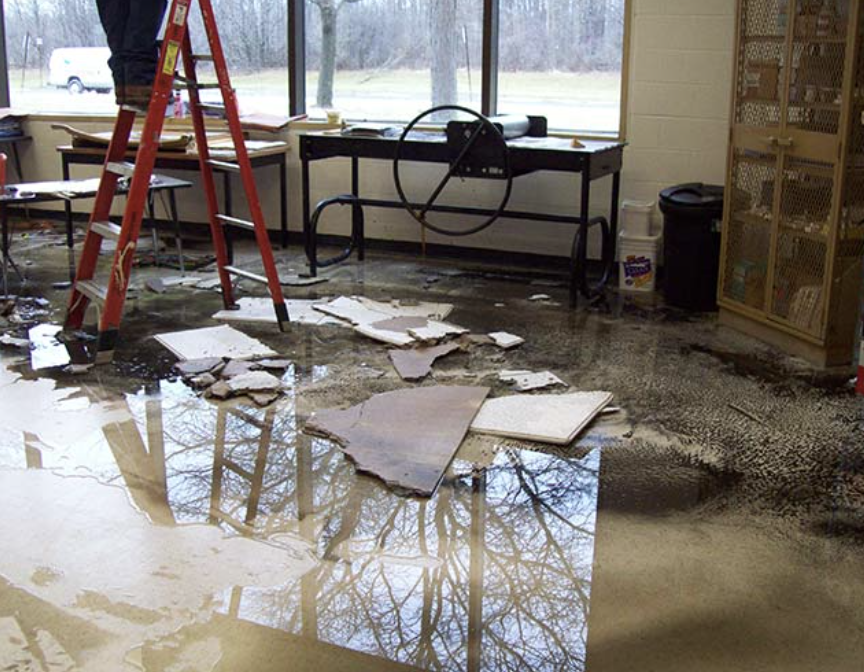
For many Wisconsin homeowners, discovering this gap happens at the worst possible moment - while standing in 6 inches of basement water after their sump pump failed during a spring storm, calling their insurance company and hearing "that's not covered under your policy." Understanding what is and isn't covered before that moment is the most useful thing this post can do for you.
What Standard Homeowners Insurance Does Cover
First, the good news: standard homeowners insurance does cover several types of water damage that are common in Wisconsin. The key test is whether the damage was sudden, accidental, and originated from inside the home.
Typically covered under a standard Wisconsin homeowners policy:
- Burst pipe water damage - water that escapes from a frozen or otherwise failed supply pipe inside the home is generally covered as a sudden and accidental loss
- Appliance failures - overflow or failure of a washing machine, dishwasher, or water heater that causes water damage is usually covered
- Roof leak damage from a storm - if a storm damages your roof and water enters as a direct result, that's generally covered under your dwelling coverage
- Accidental overflow - a bathtub or toilet that overflows accidentally (not due to a sewage backup) is typically covered
If your basement flooded because a supply pipe burst - not because of groundwater or a sump pump failure - your standard policy likely does cover it. Document everything, call your insurer, and call a restoration team simultaneously. They can work in parallel.
What Standard Homeowners Insurance Does NOT Cover
Here is where most Wisconsin homeowners encounter surprises. The following are almost universally excluded from standard homeowners policies:
Sump Pump Failure and Backup
If your sump pump fails and your basement floods with groundwater, your standard policy will not cover it. This is arguably the most important gap for SE Wisconsin homeowners to understand, because sump pump failure is the most common cause of basement flooding in this region. The coverage that addresses this is a water backup endorsement (also sometimes called a "service line" or "water and sewer backup" endorsement) added to your homeowners policy.
Groundwater and Seepage
Water that enters through foundation cracks, seeps through basement walls, or rises with the water table during heavy rain or snowmelt is not covered by a standard policy. This is classified as a gradual or ground-source water event, not a sudden internal accident.
Overland Flooding
If a river, creek, or surface water body overflows and water enters your home from outside - as happened in parts of Racine County and southern Milwaukee County during major rain events - this is flood damage and requires a separate flood insurance policy through the National Flood Insurance Program (NFIP) or a private flood insurer. Standard homeowners policies explicitly exclude this.
Gradual Leaks and Neglected Damage
A pipe that has been slowly leaking for months and has caused water damage over time is typically not covered. Insurance covers sudden losses, not problems that accumulated because they weren't addressed. If your adjuster determines a leak was ongoing and should have been caught, expect a coverage denial.
The Wisconsin-Specific Coverage Gap: Water Backup Endorsement
For most Racine County, Milwaukee, and Waukesha County homeowners, the most important insurance conversation to have is about adding a water backup endorsement to your existing homeowners policy.
This endorsement - which typically costs $50 to $200 per year added to your premium - extends your coverage to include:
- Sump pump failure and resulting water damage
- Water that backs up through sewers or drains
- Water backup from a sump pit that overflows due to heavy volume
Given that SE Wisconsin's high water table and spring snowmelt conditions make sump pump failure a common annual event for many properties, the cost of this endorsement is trivial relative to the potential claim. A finished basement flooding event that isn't covered by insurance can easily cost $5,000 to $15,000 out of pocket. An endorsement that costs $100-$200 per year covers that loss for pennies on the dollar.
If you don't currently have this endorsement, call your insurance agent today and ask specifically: "Do I have water backup coverage for sump pump failure?" The answer will tell you immediately whether you have the gap.
NFIP Flood Insurance: What It Covers and What It Doesn't
The National Flood Insurance Program (NFIP) provides flood coverage that standard homeowners policies exclude - but it's important to understand that NFIP coverage is specifically for overland flooding (surface water from rising rivers, lakes, or storm surge). It does not cover:
- Sump pump failure or groundwater backup
- Sewer backup
- Water from a burst pipe inside the home
For most SE Wisconsin homeowners, NFIP flood insurance is less relevant than a water backup endorsement, because the flooding risk here comes primarily from groundwater and sump failure - not overland flooding. However, properties near rivers, lakes, or in FEMA-designated flood zones should have NFIP coverage in addition to the endorsement.
NFIP policies also have a 30-day waiting period before they take effect, so they cannot be purchased in response to an imminent storm. If you don't have it, you need to obtain it before a storm event, not during one.
How to File a Water Damage Insurance Claim in Wisconsin
If you've had basement flooding and believe the cause may be covered, here's how to protect your claim from the start:
- Document everything before cleanup begins. Take photos and video of the water level, the affected areas, the sump pit or source of water, and any visible damage to contents and structure. Date and time stamps are automatically captured by most phone cameras.
- Call your insurer to open a claim immediately. Most policies require "prompt notification" of a loss. Waiting days or weeks to report can complicate your claim.
- Begin emergency mitigation - it doesn't void your claim. Insurance policies require you to take reasonable steps to prevent further damage. Calling a restoration company to begin extraction and drying is not only acceptable - it's expected. Waiting for an adjuster to arrive before starting extraction is not required and can result in more damage and higher costs.
- Keep all receipts. Emergency hotel stays, equipment rentals, and out-of-pocket expenses related to the loss may be reimbursable.
- Request the adjuster's full damage report. If your claim is denied or underpaid, you have the right to understand the basis of the determination and to dispute it.
Our team works directly with all major Wisconsin insurance carriers and can document damage in a format that supports your claim process. We've navigated hundreds of claims across Milwaukee, Racine County, and Waukesha County and know what adjusters need to see. See our insurance information page for details on how we work alongside your insurer.
What If Your Basement Flooding Isn't Covered?
If your flood isn't covered - either because you don't have a water backup endorsement, or because the cause falls outside what your policy covers - you're responsible for the restoration cost out of pocket. A few things to know in that situation:
- Restoration costs are not negotiable in the sense that cutting corners to save money creates mold and structural problems that cost more to fix later. The scope of work required is determined by the damage, not by what you want to spend.
- Some restoration companies offer payment plans or financing options for uninsured losses. Ask about this when you call.
- Federal disaster declarations - which occasionally apply to significant flooding events in SE Wisconsin - can make low-interest disaster loans available through FEMA. This is not the same as insurance but can provide financial relief for major uninsured losses.
The Conversation to Have With Your Insurance Agent This Week
Whether or not you've had flooding, the most useful action you can take right now is a 10-minute policy review call with your insurance agent to confirm:
- Do I have a water backup / sump pump failure endorsement?
- What is the coverage limit for water backup (some policies cap this at $5,000 - make sure it's adequate for your finished basement)?
- Am I in a FEMA flood zone that warrants a separate NFIP policy?
- What documentation do I need ready if I have a water damage claim?
If you're dealing with active flooding or recent water damage right now, our water damage restoration team is available 24/7 throughout Southeast Wisconsin. We respond in 45 minutes or less and work directly with your insurer from the first call.
Call (262) 294-6360 - we serve Milwaukee, Racine County, Waukesha County, and all surrounding Southeast Wisconsin communities including Racine, Waukesha, Brookfield, New Berlin, Muskego, Franklin, Greenfield, Caledonia, Mount Pleasant, Oconomowoc, and Wauwatosa.
Latest Posts




Contact Us
For Advice
Need help? Talk to an expert
(262) 294-6360