
Mold Remediation in Elm Grove, WI | Expert Removal
Elm Grove's Tree Canopy Is a Village Treasure. For Mold, It's a Catalyst.
The mature hardwood canopy that arches over the streets of Indian Hills, shades the rooflines of Juneau Woods, and defines the Village's distinctive character does more than provide beauty and summer cooling. It creates a persistent microclimate around the homes beneath it — one of reduced sun exposure, elevated ambient humidity, and chronically slow roof and fascia drying that quietly builds the conditions for biological growth in structural assemblies over months and years.
Add to this the wave of premium renovations that have transformed Elm Grove's residential interiors over the past two decades — the custom tile showers installed over original framing, the finished attic conversions insulated against older roof assemblies, the below-grade wet bars built into spaces that experienced minor moisture events years before the renovation began — and you have a community with a meaningful and underappreciated mold risk profile hidden beneath its polished surfaces.
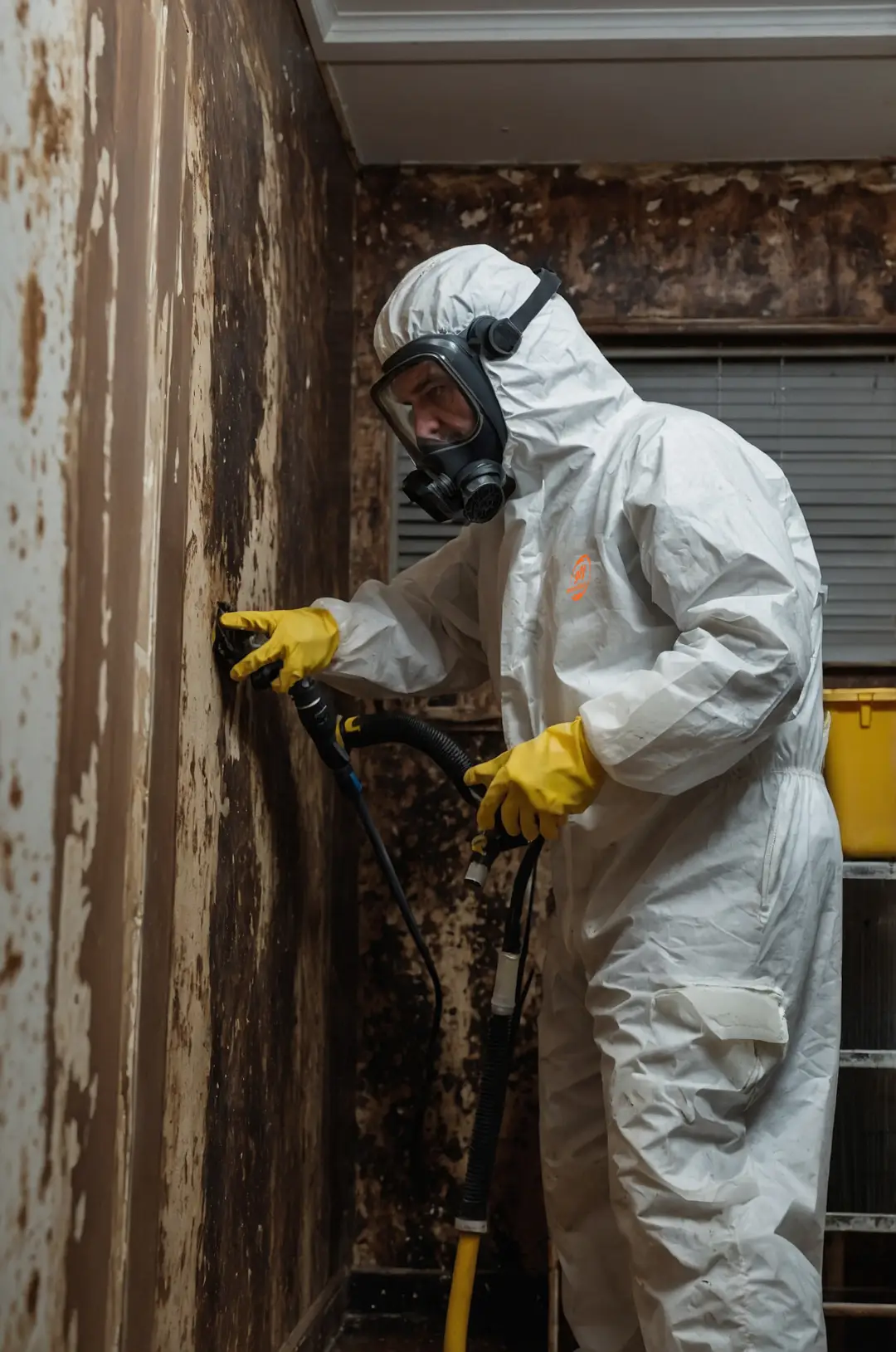
911 Restoration of Southeast Wisconsin provides IICRC S520-certified mold inspection, remediation, and verification for Elm Grove properties — conducted with the same precision and material care that the Village's homes require. Whether we are addressing tree-shade attic growth, post-renovation hidden colonization, or Underwood Creek-corridor basement moisture, we identify the full scope, remediate it correctly, and deliver written clearance documentation that protects your property's value and your family's health.
Elm Grove's Specific Mold Risk Drivers
Attic Mold from Heavy Tree Shade and Seasonal Debris
This is among the most prevalent — and most frequently overlooked — mold risk categories in Elm Grove. The mechanism is straightforward: dense overhead canopy limits direct sunlight on roof surfaces, reducing the drying that solar exposure normally provides. Leaf and organic debris accumulates in roof valleys, gutters, and soffit-adjacent areas, holding moisture against roof edges for extended periods. When this sustained moisture condition is combined with warm temperatures in a poorly ventilated attic assembly — a common condition in many of Elm Grove's older homes — mold colonizes roof sheathing, rafter assemblies, and attic insulation progressively, season after season.
Homeowners rarely discover attic mold on their own. It typically surfaces during a roof replacement project, an energy audit, or a pre-sale inspection — often after years of unchecked growth. By that point, the remediation scope can be substantial.
Hidden Mold Behind Premium Renovations
Elm Grove has seen extensive interior renovation investment. Custom bathroom tile surrounds installed over framing that experienced moisture intrusion before or during construction. Hardwood flooring installed over subfloor assemblies with residual moisture from a previous water event. Finished basement walls built against foundation surfaces with ongoing seasonal seepage behind them. In each of these scenarios, mold colonizes the concealed space between the luxury finish and the structural substrate — invisible on inspection, invisible on sale, and potentially active for years before occupant health symptoms or structural deterioration surfaces.
Premium renovation finishes do not protect against concealed mold. In some cases, they accelerate it by creating enclosed, poorly ventilated assemblies with organic substrates and persistent moisture contact.
Underwood Creek Corridor and Basement Moisture
Properties near the Underwood Creek corridor in western Elm Grove face the same creek-adjacent moisture pressure discussed in our water damage page — and that persistent below-grade moisture creates favorable mold conditions in foundation walls, rim joist assemblies, and crawlspace framing that may not manifest as visible water intrusion events. Slow, chronic moisture infiltration through concrete block or poured foundation walls, condensation on cold surfaces in humid conditions, and seasonal groundwater table fluctuations all contribute to biological growth in below-grade spaces without ever producing a dramatic flooding event.
Our IICRC S520-Certified Mold Remediation Process
Step 1 — Thorough Inspection Including Attic, Crawlspace, and Concealed Assemblies. Our assessment goes beyond visible surfaces. We inspect attic assemblies, crawlspaces, and rim joist areas as standard components of every Elm Grove mold engagement — because that is where the growth most commonly originates. Thermal imaging, moisture meters, and air sampling provide a complete picture of the biological environment in your home.
Step 2 — Discreet Containment and Negative Air Pressure. Our containment and negative air pressure protocol prevents spore displacement into unaffected areas of the home during remediation. In Elm Grove's open-plan and architecturally detailed interiors, we take particular care with containment placement and sequencing to avoid cosmetic impact to unaffected finished surfaces.
Step 3 — Attic Remediation Protocol. For attic mold — Elm Grove's most common scenario — we remove colonized insulation, HEPA-vacuum all exposed structural surfaces, treat roof sheathing and framing with EPA-registered antimicrobial solutions at verified dwell times, and assess the ventilation condition that enabled colonization to begin. Remediation without ventilation correction is a temporary solution.
Step 4 — Precision Removal of Colonized Materials in Finished Spaces. For mold discovered behind luxury renovations, we perform careful material removal — tile surround sections, drywall assemblies, flooring — with the specific goal of minimizing the removal footprint while achieving complete biological clearance. We do not remove more material than is necessary, and we document every decision for insurance purposes.
Step 5 — HEPA Air Scrubbing Throughout the Remediation Period. Commercial HEPA air scrubbers run continuously during all physical remediation work to capture displaced spores. Air quality is treated as a managed variable, not an afterthought.
Step 6 — Post-Remediation Clearance Testing — Written Results. Independent air sampling and surface testing after remediation completion verifies that spore counts have returned to background levels. You receive a written clearance report with specific data — not just a technician's verbal assessment. This documentation is valuable for insurance, pre-sale disclosure, and occupant re-entry authorization.
Step 7 — Ventilation Correction and Moisture Source Remediation. We assess and address the moisture source — attic ventilation improvement, vapor barrier installation, foundation drainage assessment — and coordinate with roofing, HVAC, or waterproofing contractors as required. A cleared mold job with an unresolved moisture source is not a complete job.
Step 8 — Premium Reconstruction with Finish Matching. All removed materials are replaced with finishes that match the existing property standard — matching tile patterns, grout colors, hardwood species, and cabinetry profiles. Elm Grove homeowners should not be able to identify where the remediation occurred after reconstruction is complete.
A Note from the Franchise Owner — To Elm Grove Homeowners Concerned About Hidden Mold
"One of the conversations I have most often with Elm Grove homeowners is about mold that nobody expected to find. A bathroom renovation contractor pulls back the tile surround and finds a colony that has been growing against the framing for years. A pre-sale inspection triggers an attic inspection and reveals widespread roof sheathing growth under a canopy of mature oaks. A finished basement project is paused when the contractor finds the framing in the exterior wall is compromised.
These discoveries are alarming, and they happen in beautifully maintained homes — because the conditions that create hidden mold in Elm Grove are often invisible from the surface. My commitment to homeowners in the Village is to conduct the most thorough inspection in the industry, deliver the most precise remediation available, and rebuild every affected space to a standard they're proud to show. More than ten years working in high-value Waukesha County properties has given me a very specific understanding of what Elm Grove homes require — and I hold my team to that standard on every job."
— Joe Minsky, Owner & IICRC-Certified Mold Remediation Specialist, 911 Restoration of Southeast Wisconsin
Mold Remediation FAQ — Elm Grove, WI
I'm preparing to sell my Elm Grove home. Should I have a mold inspection before listing?
Given Elm Grove's specific risk factors — heavy canopy shade, creek-adjacent moisture, and the prevalence of finished basement renovations — a pre-listing mold inspection is a prudent step. Discovering and resolving mold before listing avoids inspection contingency issues, disclosure complications, and the negotiating leverage that a buyer gains from post-offer mold findings. We provide written clearance reports suitable for real estate transaction use.
My Elm Grove home had attic mold discovered during a roofing project. Is this covered by homeowners insurance?
Mold resulting from long-term moisture accumulation — a condition applicable to most attic mold scenarios — is typically excluded from standard Wisconsin homeowners policies as a maintenance issue. However, if the moisture source is a sudden and accidental event that is covered (such as a roof defect that allowed active water intrusion), the associated mold damage may be covered under that claim. We assist with documentation and adjuster communication to clarify coverage.
Can mold grow in a well-maintained, climate-controlled Elm Grove home?
Yes. Mold does not discriminate based on the quality of a home's interior maintenance. Attic spaces, crawlspaces, and behind-wall assemblies operate independently of the conditioned living environment and are governed by their own temperature and humidity dynamics. A home with immaculate living areas can simultaneously have active mold growth in its attic or behind its bathroom tile — which is precisely why professional inspection in risk-factor environments like Elm Grove is warranted regardless of maintenance history.
How do you protect our finishes and furnishings during attic mold remediation in an occupied Elm Grove home?
Attic mold remediation is conducted with full HEPA containment between the attic access and living spaces, preventing spore displacement downward during the remediation process. Living spaces remain protected throughout. We establish and maintain a clearly communicated re-entry protocol for the remediation period, and our team works with the specific care for interior finishes that Elm Grove properties require.
Hidden Mold Is Not a Reflection of How Well You Maintain Your Home. It Is a Reflection of Where You Live.
Elm Grove's environmental conditions create mold risk that careful homeowners cannot prevent through maintenance alone. Professional inspection and certified remediation are the answer. 911 Restoration is ready.
Call (262) 294-6360 — We Answer 24/7/365 45-Minute Response | IICRC S520 Certified | Written Clearance Reports Serving Elm Grove, WI — Indian Hills, Juneau Woods, Village Park & Underwood Creek Corridor