
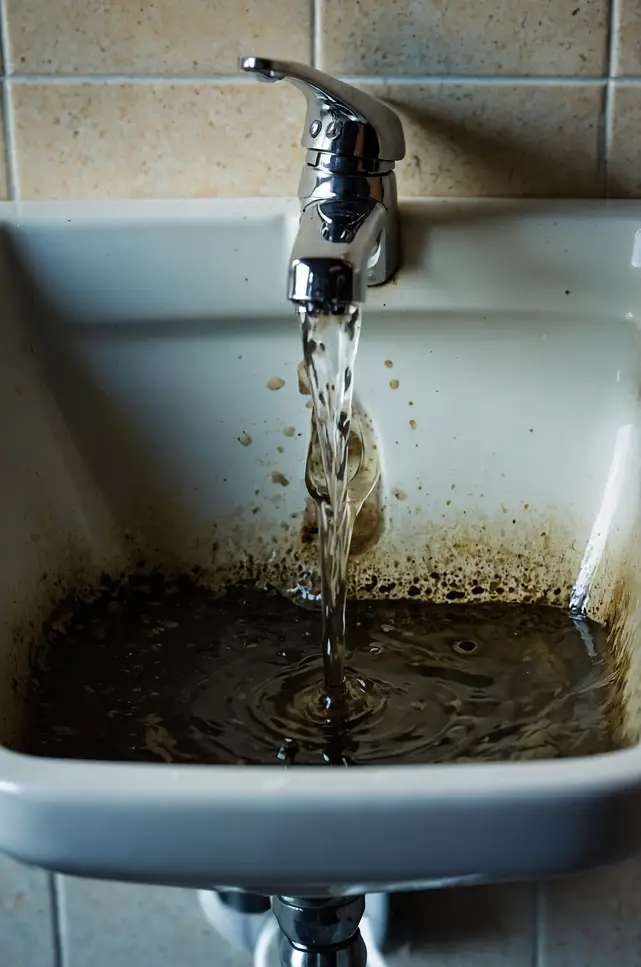
Emergency Sewage Backup Cleanup in Elm Grove, WI
In Elm Grove, a Lateral Failure Isn't Just a Plumbing Problem. It's a Threat to an Investment.
The Village of Elm Grove sits on some of Waukesha County's most desirable residential real estate — and the homes beneath those addresses reflect decades of careful ownership and significant renovation investment. When a residential sewer lateral fails and sewage enters a finished lower level in Indian Hills or Juneau Woods, the financial and personal stakes are immediate and substantial. Custom hardwood floors. Designer tile in spa-appointed bathrooms. Built-in cabinetry in home bars and media rooms appointed to a hospitality standard. The question in the first hour is not whether the situation is serious — it clearly is. The question is how quickly professional extraction can begin, and how skillfully the team manages the materials in its path.
911 Restoration of Southeast Wisconsin responds to sewage emergencies in Elm Grove within 45 minutes. We arrive equipped for Category 3 biohazard extraction and we treat every material decision in your home with the precision and care your investment deserves. Speed protects your finishes. Expertise determines what can be saved. Both are what we deliver.
Why Lateral Failures Happen in Elm Grove — and Why They Happen Without Warning
Aging Clay Tile Laterals Under Mature Root Systems
Elm Grove's residential street network is one of the most tree-dense in Waukesha County. Those mature oaks, maples, and elms that define the Village's canopy extend root systems that actively seek moisture — and residential sewer laterals are among the most reliable moisture sources in a residential landscape. Clay tile laterals installed in homes built through the 1960s and 1970s — a significant portion of Elm Grove's residential stock in neighborhoods like Indian Hills — develop root intrusions at joint connections over decades, gradually restricting flow until a backup event occurs. Often, the first indication is a slow drain. The second is sewage in the finished basement.
Soil Movement and Frost Heave in Elm Grove's Established Neighborhoods
Waukesha County's clay-heavy soils experience significant movement through seasonal freeze-thaw cycles. Established residential areas in Elm Grove — where laterals may be 40, 50, or 60 years old — have experienced decades of this soil movement, which gradually stresses lateral joints, causes offsets, and can lead to partial or complete collapse in older clay tile runs. Unlike root intrusion, which develops slowly, a soil-movement collapse can cause a sudden, high-volume backup without prior warning symptoms.
High Water Table Events and Lateral Back-Pressure
As with other aspects of Elm Grove's water management environment, Underwood Creek corridor conditions can contribute to sewage lateral stress during periods of elevated groundwater. When the water table rises significantly in the western Village, hydrostatic pressure on older lateral infrastructure can cause or accelerate backup conditions. Properties in the Indian Hills area and near the creek corridor should consider camera inspection of laterals as a preventive investment — particularly in homes that have not had lateral work in the past 20 years.
Our Sewage Cleanup Process — Designed to Protect Elm Grove's Finest Finishes
Step 1 — Immediate Response and Triage of At-Risk Materials (45 Minutes). We arrive with full Category 3 biohazard equipment and immediately assess the contamination zone with a specific focus on identifying the highest-value materials at risk. The triage decision — what can be extracted from the path of contamination, what requires removal, what can be cleaned — begins on arrival. Speed in the first hour is directly correlated with materials preserved.
Step 2 — Rapid Category 3 Extraction. Sewage water is extracted using commercial equipment dedicated to Category 3 biohazard work. We do not use standard water damage equipment for sewage extraction — the cross-contamination implications are unacceptable. Extracted material is containerized and disposed of per Wisconsin DNR biohazard waste regulations.
Step 3 — Careful Removal of Contaminated Porous Materials — Material-by-Material Assessment. Every porous material in the contamination zone requires removal — but in an Elm Grove finished basement, that removal protocol must be executed with precision. Hardwood flooring sections are removed with care for adjacent unaffected runs. Custom tile is documented before removal for match sourcing. Built-in cabinetry sections are assessed individually — lower sections in contact with sewage, upper sections above the contamination line — so that what can be preserved is preserved, and what requires replacement is replaced efficiently.
Step 4 — Hospital-Grade Disinfection of Structural Surfaces. All non-porous structural surfaces — concrete, block, metal framing, poured foundation walls — are treated with EPA-registered hospital-grade disinfectants at documented concentrations and dwell times. Dwell time compliance is not a procedural formality; it is the difference between surface-level cleaning and actual pathogen elimination.
Step 5 — Molecular Deodorization. Sewage odor compounds penetrate porous materials and persist in enclosed spaces without molecular-level treatment. We deploy hydroxyl generation and HEPA air scrubbing to eliminate odor at its source — not mask it — before any reconstruction begins. The standard for deodorization completion is the absence of detectable odor, not the presence of a masking fragrance.
Step 6 — Post-Remediation Testing and Documentation. Surface testing verifies pathogen reduction to safe levels before reconstruction. Written test results are provided for insurance, personal records, and — in the case of properties changing hands — disclosure purposes.
Step 7 — Precision Reconstruction with Material Matching. We source matched flooring, tile, cabinetry components, and finish materials and rebuild affected areas to an indistinguishable standard. Our sourcing process for Elm Grove projects includes specialty flooring and tile suppliers capable of matching distinctive profiles and custom specifications. Your finished basement should look exactly as it did before — or better.
A Note from the Franchise Owner — To Elm Grove Homeowners Facing a Sewage Emergency
"I want to be direct about what the first hour matters in a sewage event in an Elm Grove home. The difference between a 45-minute response and a three-hour response is not just a matter of discomfort — it is the difference between a hardwood floor that can be saved and one that requires full replacement. Between a custom tile shower base that can be disinfected and one that needs to come out entirely. Between a built-in cabinet that can be preserved from the waist up and one that is a total loss.
My team has worked in Elm Grove's finest homes for years. We know what's in these finished basements — the level of investment, the quality of the materials, the character of the spaces. We respond fast because every minute matters. We assess carefully because every material decision matters. And we document everything because your insurance claim deserves the same thoroughness we apply to the physical work. That's the standard in the Village, and that's the standard we hold."
— Joe Minsky, Owner & IICRC-Certified Restoration Specialist, 911 Restoration of Southeast Wisconsin
Sewage Cleanup FAQ — Elm Grove, WI
My Elm Grove home has radiant-heated tile floors in the finished basement that were affected by a sewage backup. Can they be saved?
Tile itself is a non-porous surface that can be disinfected, but the grout joints and the substrate beneath the tile are porous and may require removal if sewage saturation occurred. The radiant heating system beneath the tile requires evaluation by a heating contractor for contamination and functional integrity before the floor assembly is restored. We coordinate this assessment as part of the overall restoration process and document all findings for insurance.
How do you match existing custom tile or hardwood in an Elm Grove home during sewage cleanup reconstruction?
Finish matching is a core competency for our Elm Grove projects. For tile, we obtain the manufacturer, product name, and colorway from existing tile samples or your renovation records and source through specialty tile suppliers. For hardwood, we match species, width, profile, and stain through hardwood specialty suppliers. Where an exact match is unavailable, we present options and work with you on the best available solution before any installation begins.
Does Elm Grove homeowners insurance typically cover sewage backup damage?
Coverage requires a sewage backup or water/sewer endorsement on the policy — standard policies typically exclude it. However, many Elm Grove homeowners carry this endorsement. Given the investment levels in Elm Grove finished basement spaces, this endorsement is worth verifying with your insurance agent. We provide complete documentation to maximize your claim outcome under whatever coverage applies.
How quickly can a finished basement in an Elm Grove home be restored after a sewage backup?
A sewage backup affecting a finished basement typically involves 3–5 days of remediation — extraction, material removal, disinfection, deodorization, and drying — followed by a reconstruction period that varies by material scope. A single-room lateral failure with limited material involvement can be fully reconstructed in 2–3 weeks. A more extensive event affecting multiple finished rooms and matching complex finishes may run 4–6 weeks. We provide a specific timeline after initial assessment.
Elm Grove's Investment-Grade Homes Deserve Investment-Grade Sewage Cleanup.
The faster the response, the more can be saved. 911 Restoration of Southeast Wisconsin is on call for the Village — 24 hours a day.
Call (262) 294-6360 — We Answer 24/7/365 45-Minute Response | Category 3 Certified | Precision Material Matching Serving Elm Grove, WI — Indian Hills, Juneau Woods, Village Park & Watertown Plank Road Corridor